Asalia Nazario is best known publicly as the mother of actress Zoë Saldaña, but her own life story is closely tied to the family decisions that shaped all three of her daughters. After losing her first husband in a car accident, she worked demanding jobs, supported her children across two countries and remained one of the strongest influences in Zoë’s life.
Unlike her famous daughter, Asalia has never built a career around entertainment or celebrity. Most of what is known about her comes from Zoë’s interviews and family stories rather than a public biography of her own. That makes it especially important to separate well-supported facts from details that recent websites have repeated without clear evidence.
Asalia Nazario at a Glance
Detail
Information
Full name
Asalia Nazario
Known for
Mother of Zoë Saldaña
Children
Mariel, Zoë and Cisely Saldaña
First husband
Aridio Saldaña
Later husband
Dagoberto Galán
Known work
Courtroom translator and hotel maid
Family roots
Dominican, with Puerto Rican ancestry through her father
Main family locations
New York and Dominican Republic
Languages in the family
Spanish and English
Entertainment career
No
Exact date of birth
Not reliably confirmed
Net worth
Not publicly verified
Public profile
Mostly private
The clearest picture of Asalia comes from her role as a mother and provider rather than from celebrity databases. Her life became better known because Zoë repeatedly credited her with shaping the family’s work ethic, independence and determination.
Her Family Background Has Often Been Reported Incorrectly
Asalia’s heritage is one of the most frequently confused parts of her biography.
For years, many profiles described Zoë Saldaña as having a Puerto Rican mother and Dominican father. That version became widely repeated across entertainment websites and even major publications.
Zoë later clarified the issue herself in 2025. She said both of her parents were born in the Dominican Republic, while the Puerto Rican side of the family comes through Asalia’s father.
That newer first-person explanation is more useful than older summaries that reduced Asalia’s background to simply “Puerto Rican.”
New York Became Central to the Family’s Life
Asalia spent a major part of her adult life connected to New York.
Zoë grew up in the Jackson Heights area of Queens with her sisters Mariel and Cisely. The household was bilingual, and Spanish played an important role in family life alongside English.
New York also became important for practical reasons after the family experienced tragedy. It was where Asalia could work and earn enough money to help support her daughters while they later lived in the Dominican Republic.
That period of moving between countries became one of the defining parts of the family’s story.
Asalia was married to Aridio Saldaña, Zoë’s biological father.
Together they had three daughters: Mariel, Zoë and Cisely. Zoë has spoken warmly about her father in later interviews and described a close family environment before his death.
The family’s life changed suddenly in 1987 when Aridio died in a car accident.
Zoë was nine years old at the time, and the loss affected the entire household. It also left Asalia facing the challenge of supporting three young daughters without her husband.
Losing Her Husband Changed Everything
Aridio’s death became the turning point in Asalia’s adult life.
Zoë has spoken about how deeply her mother was affected by the loss and how difficult the period immediately afterward became. Grief was not the only problem. Asalia also had to think about housing, education, safety and how she could continue earning enough to support three children.
The family eventually made a difficult arrangement.
The daughters spent much of their youth in the Dominican Republic with relatives, while Asalia worked to finance their schooling and daily needs. The arrangement meant long stretches of physical separation, but it gave the girls family support while their mother concentrated on keeping the household financially stable.
Why the Girls Moved to the Dominican Republic
After their father died, Mariel, Zoë and Cisely moved to the Dominican Republic.
The move connected them more closely with their extended family and gave them a different environment from the New York childhood they had known. Zoë later trained seriously in dance there, including ballet, before eventually returning to New York.
The move is sometimes described online as though Asalia simply sent her children away and remained permanently in the United States.
The reality appears to have been more complicated. Family accounts describe her dividing time between countries while continuing to work and send money to support the girls.
That distinction matters because the decision was primarily financial and practical, not a withdrawal from parenting.
She Worked as a Courtroom Translator
One of Asalia’s best-documented jobs was courtroom translation.
Her ability to work in both English and Spanish gave her access to translation work within the legal environment. That job became especially important after her husband’s death, when supporting the family largely fell on her.
Courtroom translation requires more than ordinary conversational fluency.
Legal proceedings depend on accurate communication, and interpreters have to follow unfamiliar language, formal terminology and rapidly changing conversations. Although Asalia did not become a public figure through this work, it became one of the occupations most often mentioned when Zoë described her mother’s effort to support the family.
She Also Worked as a Hotel Maid
Asalia reportedly worked as a hotel maid as well.
Profiles based on Zoë’s interviews describe her working long hours and combining different jobs to earn enough money for her daughters’ needs. The contrast between courtroom translation and hotel work shows how practical her approach had to be during that period.
There was no glamorous family income behind the scenes simply because Zoë later became a Hollywood star.
These jobs came before Zoë’s acting success and belonged to a period when the family was still dealing with financial pressure and the consequences of losing Aridio.
Education Was Worth the Sacrifice
Schooling appears to have been one of Asalia’s main priorities.
Accounts of the family’s years in the Dominican Republic describe her working to help keep the girls in private education. Zoë has repeatedly talked about the discipline and expectations surrounding her childhood, particularly the idea that she and her sisters should become independent adults.
That expectation was not only about academic grades.
The daughters were encouraged to speak confidently, develop interests and believe that being female should not restrict what they could do.
Those ideas stayed with Zoë and later became part of the way she described her upbringing in interviews.
Dance Became Important to Zoë’s Future
Asalia’s parenting decisions also helped create the circumstances in which Zoë discovered dance.
While living in the Dominican Republic, Zoë trained in ballet and developed a serious interest in performance. After returning to New York, she became involved in theatre and eventually began acting professionally.
It would be too simple to say Asalia directly created Zoë’s acting career.
What she did provide was access to education, exposure to the arts and the freedom to pursue an interest seriously. Those conditions helped Zoë develop the skills and confidence that later carried into acting.
Asalia Encouraged Strong, Independent Daughters
Zoë frequently describes the women in her family as strong and outspoken.
She has spoken about growing up around women who expressed their opinions and were not taught to make themselves smaller around men. Asalia appears to have been central to that family culture.
This influence showed up in practical ways.
Her daughters were expected to work, learn and make their own decisions. Zoë has often connected her confidence as an adult with the way she and her sisters were raised.
That kind of influence is harder to measure than a career title, but it is one of the most consistent themes in Zoë’s descriptions of her mother.
Science Fiction Was Part of the Household Too
One of the more interesting connections between Asalia and Zoë’s later career involves science fiction.
Zoë has said that her mother enjoyed science-fiction stories and helped create an interest in the genre at home. That later became particularly relevant when Zoë appeared in major science-fiction franchises including Star Trek, Avatar and the Marvel films.
The connection should not be exaggerated into a direct career plan.
Asalia did not prepare her daughter specifically to become a science-fiction actress. She simply helped create a home where curiosity, films and imaginative stories were part of normal family life.
Years later, that early familiarity happened to align with some of Zoë’s biggest roles.
Dagoberto Galán Became Her Second Husband
Asalia later married Dagoberto Galán.
Zoë and her sisters have described him as an important father figure in their lives. He entered the family after Aridio’s death and became part of the household during the girls’ later childhood.
Zoë has spoken about having a strong relationship with her stepfather and considering him another father.
This is one reason a simple family tree does not fully describe the emotional structure of the Saldaña family. Aridio remained important in memory, while Dagoberto became a present parental figure as the girls grew older.
Asalia Raised Three Daughters
Asalia is the mother of Mariel, Zoë and Cisely Saldaña.
Zoë became internationally famous through acting, while Mariel and Cisely have also been involved in entertainment-related business activities. The sisters have worked together through Cinestar Pictures, reflecting the closeness that has remained a major part of their family identity.
Their relationship also appears frequently in Zoë’s public comments.
Rather than presenting her success as an individual story, she often talks about her mother and sisters together as part of the support system that helped shape her life.
That family-centered approach is one of the most consistent themes across her interviews.
Zoë Saldaña Frequently Calls Her Mother an Inspiration
Asalia’s influence is not something later websites invented around a famous parent.
Zoë herself has repeatedly spoken about the respect she has for her mother. She has described Asalia as hardworking, resilient and unwilling to let difficult circumstances determine the future of her children.
The admiration is especially understandable in light of the years after Aridio’s death.
Asalia had to combine grief, work and parenting while coordinating life across New York and the Dominican Republic. Those experiences became part of the family history that Zoë continued discussing even after achieving major success.
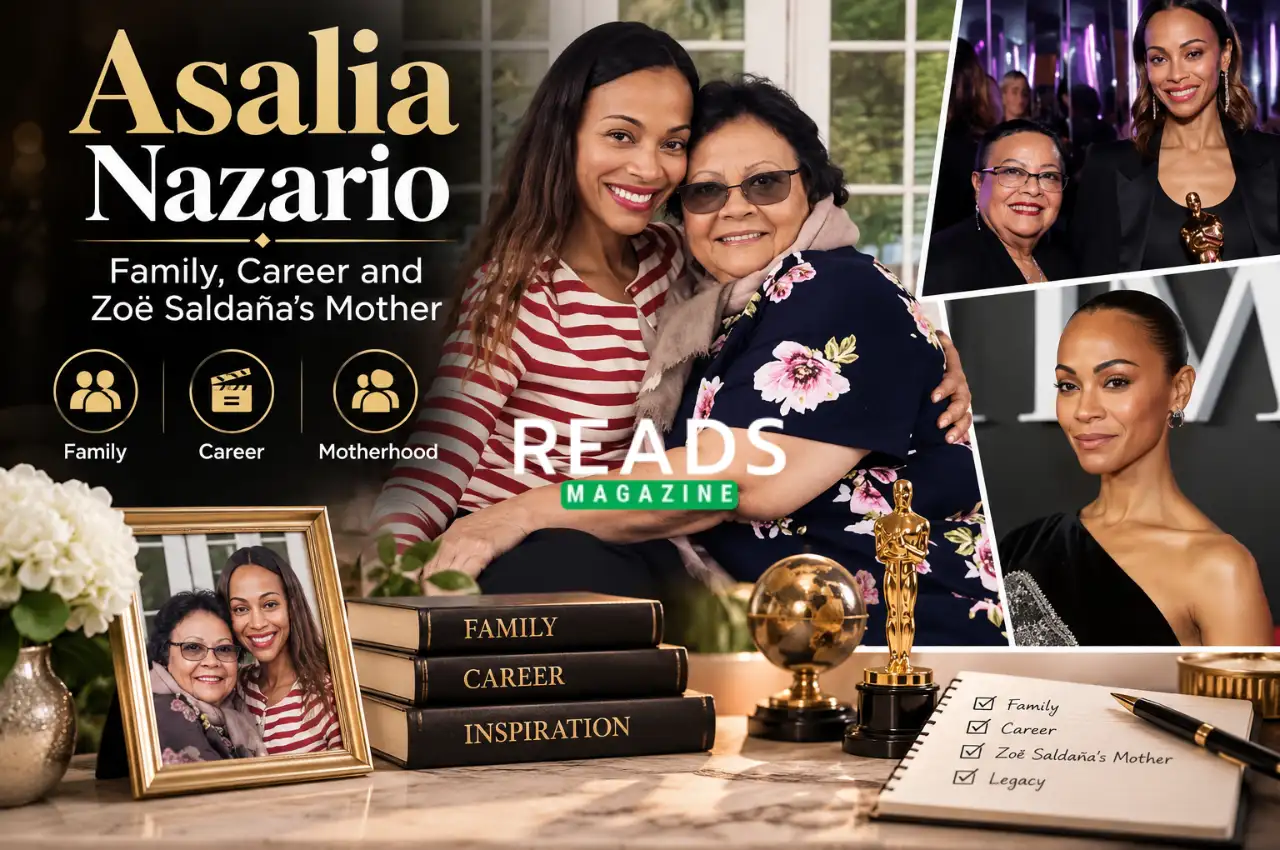
She Has Appeared at Major Events With Zoë
Although Asalia generally maintains a private life, she has occasionally attended major events with her daughter.
She appeared with Zoë at entertainment and awards events over the years, including major celebrations during Zoë’s award-winning period in 2025. She also joined other family members at the Golden Globe Awards that year.
These appearances should not be mistaken for an entertainment career.
Asalia attends primarily as a family member rather than as a performer or media personality. She has never built a separate celebrity brand around being Zoë Saldaña’s mother.
That relative privacy is one reason reliable details about her current everyday life remain limited.
Zoë’s 2025 Oscar Win Became a Family Moment
The Saldaña family received renewed attention in 2025 when Zoë won the Academy Award for Best Supporting Actress for Emilia Pérez.
The achievement was particularly notable because of Zoë’s Dominican heritage and the way she publicly connected her success to her family history. Her mother and sisters were part of the wider celebration around that awards season.
For Asalia, the moment represented a very different chapter from the years when she was working multiple jobs to support her daughters.
Still, it would be misleading to reduce her life to the eventual success of one child. Her influence also appears in the close relationship among all three sisters and in the family’s continuing emphasis on working together.
Is Asalia Nazario Puerto Rican or Dominican?
The most accurate current answer needs some explanation.
Older profiles often call Asalia Puerto Rican. Zoë Saldaña clarified in 2025 that her mother and father were both born in the Dominican Republic, while her maternal grandfather was Puerto Rican.
That means Asalia has both Dominican and Puerto Rican family connections, but describing her simply as Puerto Rican leaves out Zoë’s more recent clarification.
This is a good example of why celebrity background information should be updated when the person involved gives a clearer first-person account.
Repeated older biographies are not necessarily stronger evidence just because there are more of them.
Her Exact Age Is Not Reliably Public
Asalia’s exact birth date is not well established.
Some recent websites provide specific years, birthdays or ages, but the claims are difficult to trace to dependable records. Other articles estimate a birth period based on stories about when she may have moved to the United States.
Those calculations should not be turned into fact.
Asalia is a private individual who became known because of her daughter. Unless a reliable public record establishes her date of birth, it is better to leave the precise age unknown.
The same caution applies to claims about her height, education and birthplace when the supporting evidence is weak.
Asalia Nazario Net Worth Is Also Unknown
Asalia’s personal net worth is not publicly documented.
She is sometimes assigned financial estimates on celebrity biography sites, but those figures do not come with reliable information about property, investments, savings, debt or other assets.
Her daughter’s wealth should not be treated as evidence of Asalia’s finances.
Zoë has built a highly successful acting career, but a parent does not automatically share the same net worth as an adult child. Without dependable financial records, assigning Asalia a specific multimillion-dollar figure would simply be speculation.
Her story is much better documented through work and family than through personal wealth.
She Is Not an Actress or Entertainment Professional
Some search profiles blur Asalia’s identity because she appears in photographs beside Zoë.
She is not known for an acting career, filmography or television work.
Her documented working life instead includes jobs such as courtroom translation and hotel work. Her connection with Hollywood comes through her daughter, not through an entertainment career of her own.
That distinction is worth keeping because celebrity-family articles often inflate ordinary private careers into something more glamorous than the evidence supports.
Asalia’s real work history is more important precisely because it shows the circumstances from which the family developed.
Her Current Life Remains Mostly Private
There is no dependable reason to claim that Asalia has begun a new public career or major business venture in recent years.
She still appears occasionally with family, but her day-to-day activities, exact residence and personal finances are not widely documented.
That privacy should not be interpreted as a mystery requiring speculation.
Many parents of famous people simply live outside the entertainment industry. Asalia became publicly interesting because Zoë speaks so often about her, not because Asalia sought fame for herself.
The available evidence is enough to understand her role without filling every private gap.
Frequently Asked Questions About Asalia Nazario
Who is Asalia Nazario?
Asalia Nazario is the mother of actress Zoë Saldaña and her sisters Mariel and Cisely. She is known for supporting and raising her daughters after the death of their father.
Is Asalia Nazario Dominican?
Yes. Zoë Saldaña clarified in 2025 that both of her parents were born in the Dominican Republic. Asalia also has Puerto Rican ancestry through her father.
Why do some sources call Asalia Puerto Rican?
Older profiles frequently described Zoë as having a Puerto Rican mother. Zoë later explained that her maternal grandfather was Puerto Rican, while her mother was born in the Dominican Republic.
Who was Asalia Nazario’s first husband?
Her first husband was Aridio Saldaña, Zoë’s biological father. He died in a car accident in 1987.
Who is Asalia Nazario married to now?
She later married Dagoberto Galán, who became an important stepfather to Zoë and her sisters.
How many children does Asalia Nazario have?
She has three daughters: Mariel Saldaña, Zoë Saldaña and Cisely Saldaña.
What did Asalia Nazario do for a living?
She worked as a courtroom translator and hotel maid while supporting her family after her first husband’s death.
Did Asalia live in the Dominican Republic?
The family spent important periods there after Aridio’s death. Asalia also moved between the Dominican Republic and New York while supporting her daughters.
How did Asalia influence Zoë Saldaña?
Zoë has credited her mother with teaching independence, confidence and a strong work ethic. Asalia also supported education, dance and interests that later became important to Zoë’s career.
How old is Asalia Nazario?
Her exact birth date and age are not reliably confirmed in strong public sources.
What is Asalia Nazario’s net worth?
Her personal net worth is not publicly verified. Specific figures published on celebrity websites should be treated as estimates rather than established facts.
Is Asalia Nazario an actress?
No. She is not known to have had a professional acting career.
Asalia Nazario: The Family Story Behind Zoë’s Success
Asalia Nazario’s public story is not really about fame. It is about what happened before fame reached the family: losing a husband, raising three daughters, working long hours and making difficult decisions about where those children could receive the best support and education.
Her influence also explains why Zoë so often talks about success as a family achievement rather than an individual one. The confidence, independence and work ethic she describes were developed long before movie premieres and awards ceremonies entered the picture.
Some details about Asalia will probably remain private, including her exact age, finances and everyday life. What is already documented gives a much clearer picture than speculative biography pages do: a working mother whose decisions helped three daughters move through an unusually difficult childhood and build independent adult lives.













Comments are off for this post.