Nylon is used in everything from sportswear and swimsuits to tights, jackets, backpacks, underwear, and outdoor clothing. Because it is lightweight, strong, and quick-drying, it is also considerably easier to care for than many natural fabrics. But if you have ever pulled a nylon garment from the laundry and thought it looked slightly smaller, one obvious question comes to mind: does nylon shrink when washed?
Under normal washing conditions, nylon is relatively resistant to shrinkage. A cold or moderately warm wash is unlikely to make a 100% nylon garment dramatically smaller. Problems are more likely to occur when nylon is exposed to excessive heat, particularly during tumble drying, ironing, or very hot washing.
There is another complication: many garments described casually as “nylon” are actually blends. Nylon mixed with cotton, elastane, spandex, rayon, or other fibers may behave differently from pure nylon, so the care label matters more than the fabric name alone.
Why Nylon Doesn’t Shrink as Easily as Cotton or Linen
Nylon is a synthetic fiber, also known as a type of polyamide. Unlike cotton, linen, and wool, it is manufactured from polymers rather than obtained directly from a plant or animal fiber.
That difference affects what happens in the washing machine. Natural fibers can undergo noticeable dimensional changes when they absorb water and the tension created during manufacturing relaxes. Nylon is generally more dimensionally stable during ordinary washing and absorbs much less moisture than many natural fibers.
This is why a cotton T-shirt may noticeably change after an unsuitable wash while a nylon garment often comes out looking much the same. Nylon’s weak point is not ordinary water exposure so much as excessive heat, which can alter the shape and structure of the synthetic fibers.
Nylon Shrinkage at a Glance
Laundry Situation
What Usually Happens
Cold-water wash
Little risk of shrinkage
Warm-water wash
Usually remains stable if permitted by the care label
Very hot wash
Greater risk of distortion or dimensional change
Air drying
Lowest heat-related risk
Low-heat tumble drying
Often suitable when the care label permits it
High-heat tumble drying
Greater risk of shrinkage, warping, or fabric damage
Hot ironing
Can damage heat-sensitive nylon fibers
Nylon blend
Behavior depends on the other fibers in the fabric
The important distinction is that overheating nylon does not necessarily produce the neat, predictable shrinkage people associate with cotton. The garment may instead become distorted, wrinkled, stretched unevenly, or damaged.
Does 100% Nylon Shrink When Washed?
Pure nylon generally resists significant shrinkage during normal laundering. If a 100% nylon garment is washed according to its care instructions, you should not expect it to suddenly become a full size smaller.
That does not make nylon completely immune to dimensional changes. Fabric construction, finishing treatments, previous heat exposure, and the way the garment was manufactured can all influence how it responds. A knitted nylon garment may also behave differently from a tightly woven nylon jacket.
For that reason, “100% nylon” should not be interpreted as permission to use any washing temperature you like. The individual care label remains the safest guide.
Does Nylon Shrink in Cold Water?
Cold water is unlikely to cause meaningful shrinkage in nylon by itself. In fact, cooler washing is often a practical choice for synthetic clothing because it reduces unnecessary exposure to heat while still cleaning many everyday garments effectively.
Cold washing can be particularly useful for activewear, delicate nylon underwear, tights, and garments containing elastic fibers. These items may depend on stretch and recovery for their fit, so gentle laundering helps protect more than just their dimensions.
If the manufacturer recommends warm water, however, there is no need to assume cold water is mandatory. Nylon generally handles ordinary washing temperatures well when the garment has been designed for machine washing.
Does Nylon Shrink in Hot Water?
Very hot water presents more risk than cold or moderately warm water, but the problem is not always simple shrinkage. Because nylon is a heat-sensitive synthetic material, excessive temperature can alter the fibers and affect the way the fabric sits, stretches, or holds its shape.
A garment that has been overheated may therefore feel smaller in one area while looking distorted in another. Elastic components, coatings, prints, waterproof treatments, or other materials used in the garment may also react differently to the heat.
Using extremely hot water in an attempt to sanitize or intentionally shrink nylon is therefore not a particularly good strategy. If the clothing needs special cleaning, follow the instructions provided for that specific garment.
Does Nylon Shrink in the Dryer?
The tumble dryer is usually a bigger concern than the washing machine when caring for nylon.
Nylon dries relatively quickly, which means prolonged exposure to high dryer temperatures is often unnecessary. Excessive dryer heat can affect the fibers, contribute to permanent wrinkles, damage elastic components, or change the garment’s shape.
If the care label permits tumble drying, a low-temperature setting is generally more appropriate than maximum heat. Some nylon clothing can also be air dried easily because the fabric does not retain as much moisture as many natural textiles.
Washing vs. Drying Nylon
Method
Relative Risk to Shape
Cold wash + air dry
Very low
Warm wash + air dry
Low
Cold wash + low-heat dryer
Low
Warm wash + low-heat dryer
Low to moderate
Hot wash + high-heat dryer
Higher
Repeated excessive heat
Increased risk of permanent damage
A key point here is that a dryer can damage nylon without producing useful or even shrinkage. If you are hoping to make an oversized nylon garment smaller, high heat may leave you with a misshapen garment rather than a better-fitting one.
Does Nylon Shrink After the First Wash?
Nylon does not normally have the same dramatic “first wash” reputation as untreated cotton or linen. Properly manufactured nylon fabrics are generally designed to remain relatively stable during normal laundering.
You may still notice a slight change in how a new garment feels after washing. Finishing products can be removed, the fabric can settle, and the way the garment hangs may change slightly. That does not necessarily mean the fibers have undergone significant shrinkage.
A more obvious change after the first wash may indicate that the garment contains other fibers, was exposed to too much heat, or has a construction that responds differently to laundering.
Does Nylon Keep Shrinking Every Time You Wash It?
Properly cared-for nylon should not become progressively smaller every time it enters the washing machine. If substantial shrinkage occurred during every wash, nylon would be impractical for the sportswear, swimwear, hosiery, and outdoor clothing in which it is commonly used.
Repeated exposure to inappropriate heat is a different matter. Continuously drying heat-sensitive garments at high temperatures can gradually affect their appearance and performance, even if each individual laundry cycle produces only a subtle change.
If an older nylon garment seems to fit differently, also consider stretched or damaged elastic, worn fabric, changes in garment construction, or changes in your own measurements rather than assuming repeated washing has simply continued shrinking the nylon.
Why a Nylon Garment May Seem Smaller After Washing
Not every fit change is true fiber shrinkage. Several things can make freshly washed nylon clothing feel tighter or appear smaller.
A knitted garment can temporarily sit differently after washing. Elastic components may contract or lose some recovery, while heat can create wrinkles that make the fabric seem more compact. Clothing that was stretched during wear may also return closer to its original dimensions during laundering.
That means the correct question is sometimes not “Did the nylon shrink?” but “Did the garment change shape?”
This distinction becomes especially important with leggings, swimwear, underwear, sports bras, and other stretch garments.
Does Nylon-Spandex Shrink?
Nylon and spandex, also called elastane, are commonly combined in activewear, swimwear, leggings, underwear, and fitted clothing. The nylon provides strength and durability while the elastane provides stretch.
These garments deserve extra care because their performance depends on elasticity. Excessive heat may not simply make them smaller; it can also damage the stretch fibers and reduce their ability to return to their original shape.
A nylon-spandex garment that has been repeatedly overheated may eventually feel loose, uneven, or less supportive rather than simply becoming smaller.
For stretch garments, a sensible routine usually involves gentle washing and avoiding unnecessary dryer heat. The care label should determine whether the item should be tumble dried at all.
Does Nylon-Polyester Shrink?
Nylon-polyester blends are generally quite resistant to ordinary shrinkage because both components are synthetic fibers with relatively good dimensional stability.
However, the garment can still be sensitive to high temperatures. Finishes, coatings, stitching, elastic bands, or other materials may also influence how it behaves in the laundry.
There is therefore little reason to subject a nylon-polyester garment to extreme heat simply because both fibers are considered durable. Gentle care usually preserves the shape, color, and surface of synthetic clothing for longer.
What About Nylon and Cotton Blends?
A nylon-cotton blend is more complicated because cotton responds differently to washing than nylon does.
Cotton is considerably more prone to relaxation shrinkage, especially when it has not been pre-shrunk. In a blended garment, changes in the cotton component can therefore alter the overall dimensions even if the nylon itself remains relatively stable.
The percentage of each fiber matters. A garment containing mostly cotton with a small amount of nylon may behave more like cotton, while one dominated by nylon may remain more dimensionally stable.
This is why checking the complete fiber composition is useful whenever you are worried about shrinkage.
Which Nylon Clothes Need the Most Care?
“Nylon clothing” covers a remarkably wide range of products, and they should not all be washed in exactly the same way.
Nylon Tights and Stockings
Hosiery is thin and delicate. Snagging, stretching, and abrasion may be bigger concerns than shrinkage, so gentle washing is particularly important.
Nylon Leggings and Activewear
These garments frequently contain elastane. High heat can affect stretch and recovery, making gentle washing and drying especially useful.
Nylon Jackets
A jacket may contain insulation, coatings, waterproof membranes, zippers, adhesives, and lining materials. The outer nylon fabric is therefore only one part of the care equation.
Nylon Swimwear
Swimsuits frequently combine nylon with elastane and are also exposed to chlorine, salt water, sunscreen, and body oils. Rinsing and gentle washing help protect the whole garment.
Nylon Backpacks and Bags
Bags may contain foam, waterproof coatings, structured inserts, metal hardware, and adhesives. A nylon label does not automatically mean the entire bag belongs in a washing machine or dryer.
The lesson is simple: fiber content tells you what the fabric is made from, while the care label tells you how the finished product should actually be cleaned.
How to Wash Nylon Without Shrinking or Damaging It
Most everyday nylon garments are relatively easy to wash. You do not need a complicated routine, but avoiding unnecessary heat and rough treatment can help them last longer.
A practical nylon-care routine looks like this:
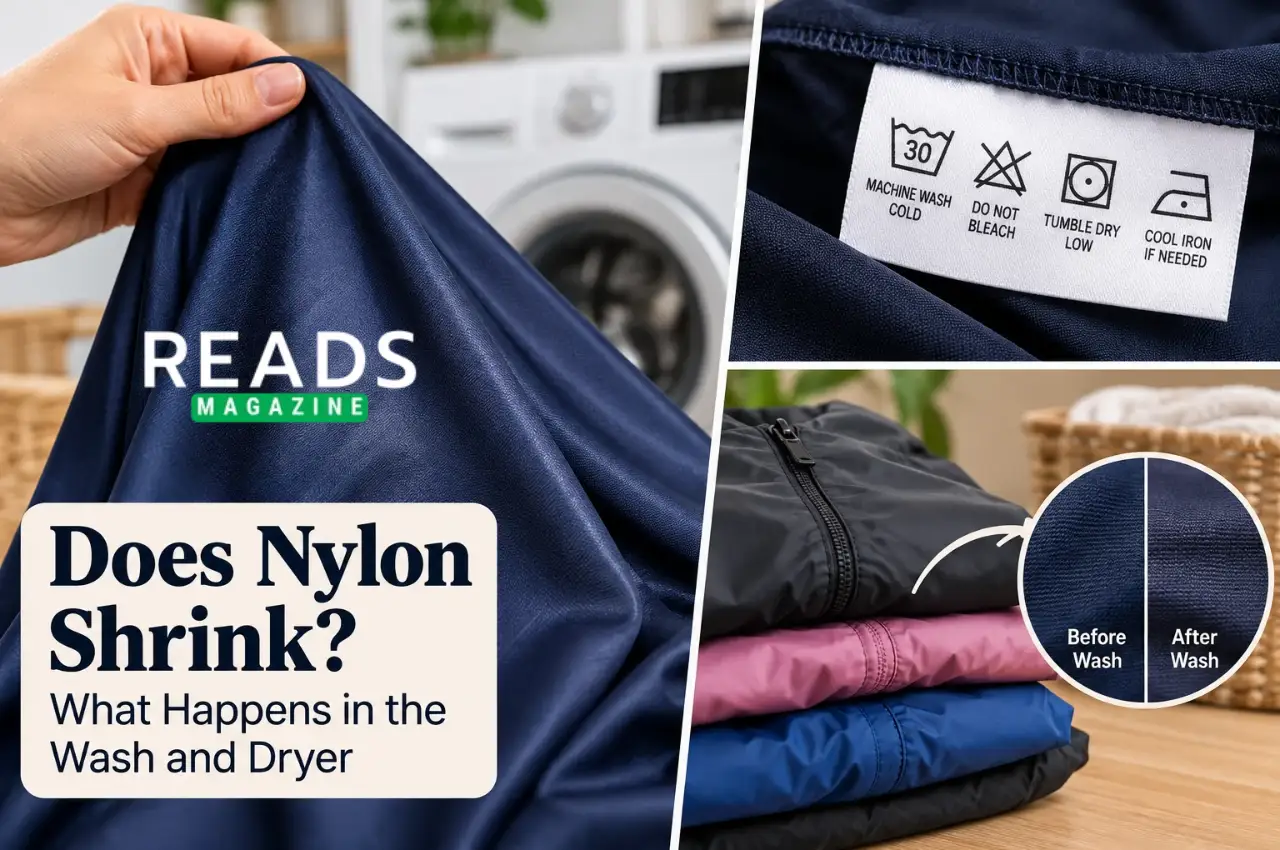
Check the care label first. A garment’s construction may require different treatment from generic nylon advice.
Separate colors appropriately. This is particularly useful with new or brightly colored clothing.
Turn suitable garments inside out. Activewear and printed items may benefit because the inner surface often holds sweat and body oils.
Use cold or moderately warm water. Extreme heat is generally unnecessary.
Choose a normal or gentle cycle as appropriate. Delicate nylon items such as hosiery need gentler handling than durable sportswear.
Avoid excessive dryer heat. Air drying or low-temperature drying is often sufficient.
Remove garments promptly. Leaving synthetic clothing compressed in a hot dryer can contribute to stubborn wrinkles.
These guidelines are useful starting points, but instructions printed on the garment should take priority.
Can You Put Nylon in the Washing Machine?
Many nylon garments are machine washable. Nylon’s strength and durability are among the reasons it is so widely used for clothing designed to withstand repeated wear and washing.
However, “nylon” does not automatically mean “machine washable.” A delicate garment, structured jacket, waterproof item, embellished piece, or bag may require hand washing or another cleaning method because of components other than the nylon fabric itself.
A washing-machine symbol on the care label is therefore more useful than simply seeing nylon listed in the fiber content.
Should Nylon Be Air Dried?
Air drying is often an excellent option for nylon because the material tends to dry relatively quickly. It avoids unnecessary dryer heat and can reduce the chance of heat-related distortion.
Depending on the garment, you may be able to hang it on a suitable hanger or drying rack. Delicate knitwear and items that could stretch under their own wet weight may be better laid flat.
Air drying is particularly attractive for nylon-spandex clothing, swimwear, and lightweight activewear, where preserving elasticity may be just as important as preventing shrinkage.
Can Nylon Be Ironed?
Nylon can be sensitive to high ironing temperatures, so it should not be treated like cotton or linen.
If a nylon garment needs ironing and its care label allows it, use the appropriate low-temperature setting. Excessive iron heat can damage synthetic fibers much more seriously than an ordinary wrinkle would.
In many cases, nylon does not need much ironing anyway because it tends to resist severe wrinkling. Hanging the garment promptly after washing may be enough.
Can You Intentionally Shrink Nylon?
It is possible for heat to change the dimensions of nylon, but deliberately shrinking it is not a reliable way to resize clothing.
The problem is control.
Suppose a nylon jacket is too wide through the body. Exposing it to excessive heat might reduce some dimensions, but it could also affect the sleeves, zipper area, lining, coating, or overall shape. A stretch garment could lose elasticity rather than becoming uniformly smaller.
Heat can also produce permanent wrinkles or distortion before you achieve the amount of shrinkage you wanted.
For an expensive garment, tailoring is generally a more predictable solution than trying to force synthetic fibers to shrink in the laundry.
Can You Shrink a Nylon-Spandex Garment on Purpose?
Trying to shrink nylon-spandex clothing is even less predictable.
The garment contains two synthetic materials that contribute different properties. Nylon provides strength while spandex supplies elasticity. High heat intended to make the clothing smaller may damage the elastane and interfere with its ability to stretch and recover.
You might end up with a garment that technically measures slightly differently but fits worse because the elastic structure has been damaged.
If leggings, swimwear, or another fitted stretch garment is significantly too large, replacing it with the correct size is usually safer than intentionally overheating it.
Can You Unshrink Nylon?
If nylon has genuinely been damaged or permanently distorted by excessive heat, restoring it completely may not be possible.
Mild shape changes can sometimes be improved by carefully dampening the garment and gently returning it toward its original dimensions while it dries. The success of this approach depends heavily on the fabric construction and what actually caused the change.
Avoid aggressively pulling or stretching the material. That can create a different problem by permanently distorting the garment.
If the item is expensive or structurally complex, professional cleaning or garment-care advice may be preferable to experimenting with additional heat.
Nylon vs. Other Fabrics: Which Shrinks More?
Nylon’s resistance to ordinary washing becomes clearer when it is compared with several familiar materials.
Fabric
General Shrinkage Tendency
Nylon
Low under normal care; heat is the main concern
Polyester
Generally low
Cotton
More prone to shrinkage, especially untreated cotton
Linen
Can experience noticeable initial relaxation shrinkage
Wool
Can shrink significantly with heat and agitation
Rayon/viscose
Can be dimensionally sensitive depending on construction
Nylon-spandex
Usually stable, but excessive heat can damage elasticity
These are broad tendencies rather than rules for every garment. A fabric’s weave, knit structure, finishing process, blend percentage, and care history all influence what happens in the laundry.
Is Nylon More Likely to Melt Than Shrink?
At excessive temperatures, thinking only about shrinkage can be misleading.
Nylon is thermoplastic, meaning heat can soften and alter the synthetic material. When temperatures become inappropriate for the fabric, distortion, glazing, permanent wrinkling, or other heat damage may become more important concerns than simple shrinkage.
This is why trying to make nylon smaller with the hottest dryer or iron setting is risky. You are not working with a natural fiber that will necessarily contract evenly; you are exposing a heat-sensitive synthetic material to conditions that can permanently change it.
Why Did My Nylon Jacket Shrink?
If a nylon jacket appears smaller after laundering, first check its complete fiber content and construction. The outer shell may be nylon while the lining, insulation, cuffs, waistband, or other sections contain completely different materials.
Dryer heat is another possibility. Structured clothing can also become distorted in a way that feels like shrinkage even if the nylon shell itself has not uniformly contracted.
Waterproof and water-resistant jackets deserve particular caution because they may contain coatings or membranes with their own care requirements. Always follow the instructions written for the complete jacket rather than applying generic nylon-care advice.
Does Nylon Shrink More When It Is Wet or Dry?
Water alone is usually not the biggest problem for nylon. The more significant concern is what happens when heat is added, especially during drying.
A wet nylon garment exposed to high dryer temperatures can experience greater stress than one washed in cool water and allowed to air dry. This is why someone might correctly wash a nylon garment and still damage it during the next stage of the laundry process.
When trying to preserve size and shape, think of washing and drying as one complete process rather than focusing only on the washing machine.
Common Questions About Nylon Shrinkage
Question
Short Answer
Does nylon shrink when washed?
Usually very little under normal washing conditions.
Does 100% nylon shrink?
It is resistant to shrinkage but can change under excessive heat.
Does nylon shrink in cold water?
Significant shrinkage is unlikely.
Does nylon shrink in hot water?
Excessive heat increases the risk of dimensional changes or damage.
Does nylon shrink in the dryer?
High dryer heat can affect nylon; low heat or air drying is safer when appropriate.
Does nylon shrink every wash?
No. Properly cared-for nylon should remain relatively stable.
Does nylon-spandex shrink?
It can change under excessive heat, but damage to elasticity is also a concern.
Can nylon be machine washed?
Many nylon garments can, but check the care label.
Can you intentionally shrink nylon?
Possibly, but the result is unpredictable and may damage the garment.
Can you unshrink nylon?
Mild distortion may sometimes improve, but heat damage can be permanent.
Should nylon be air dried?
Often yes; it dries quickly and avoids unnecessary heat exposure.
Is Nylon an Easy Fabric to Care For?
Generally, yes. Nylon is popular partly because it combines strength, light weight, quick drying, and relatively good dimensional stability. Compared with fabrics that require very careful washing to prevent substantial shrinkage, ordinary nylon garments are often straightforward to maintain.
Most problems arise when the material is subjected to more heat than it needs. A sensible washing temperature, appropriate cycle, and gentle drying method will suit many nylon garments perfectly well.
The bigger challenge is remembering that nylon is frequently only one part of a garment. Blends, stretch fibers, coatings, linings, prints, and other components can all create different care requirements.
Does Nylon Shrink When Washed? The Bottom Line
Nylon generally does not shrink significantly during an ordinary wash. As a synthetic polyamide fiber, it is more resistant to the water-related shrinkage commonly associated with natural fabrics such as cotton, linen, and wool.
Heat is the more important concern. Very hot washing, high-temperature tumble drying, or excessive ironing can change the shape of nylon and may cause distortion or permanent damage rather than neat, even shrinkage.
Blended fabrics require even more attention because the other fibers in the garment can determine how much it changes. Nylon-cotton, nylon-spandex, and nylon-polyester garments should therefore be cared for according to their complete fiber composition and care instructions.
For most nylon clothing, the simplest approach is also the safest: check the label, avoid unnecessary heat, wash gently, and use low-temperature drying or air drying when appropriate. Follow those basics and nylon is one of the easier fabrics to keep close to its original size and shape.



















Comments are off for this post.