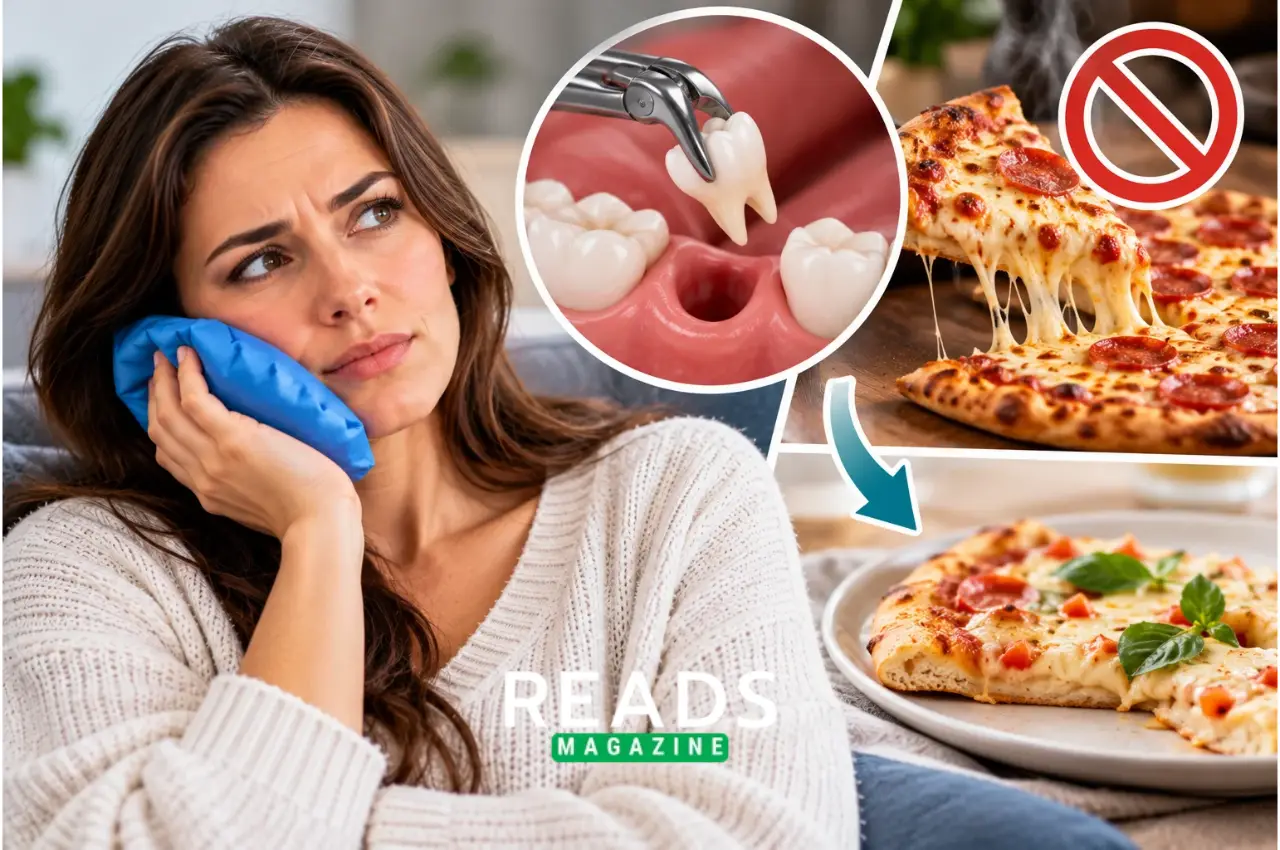
Pizza probably isn’t the first food your oral surgeon recommends after wisdom teeth removal. Between the chewy crust, melted cheese, hot temperature, and toppings that can break into small pieces, an ordinary slice asks a lot from a mouth that has just undergone surgery.
For most people, pizza is best avoided during at least the first several days after wisdom teeth removal. If recovery is uncomplicated, a very soft slice may become manageable at around one week, while chewy, crispy, heavily topped pizza is often better saved for roughly 10 to 14 days after surgery. More complicated extractions can require a longer wait.
The exact timing depends on how your wisdom teeth were removed, how many were extracted, how much swelling and jaw stiffness you have, and whether chewing causes discomfort. Your oral surgeon’s instructions should always take priority because they know what happened during your procedure.
A Quick Timeline for Eating Pizza After Wisdom Tooth Surgery
Pizza comes in many forms, so asking when you can eat it is slightly more complicated than asking when you can eat yogurt or scrambled eggs. A floppy slice with a very soft base is much easier on a healing mouth than a crisp thin-crust pizza with crunchy toppings.
Here is a practical guide:
Time After Surgery
Pizza?
Why
First 24 hours
No
Extraction sites are very fresh and require minimal chewing
Days 2–3
Usually no
Swelling and tenderness are often significant; stick with soft foods
Days 4–5
Still best avoided
Crust and toppings may require too much chewing and can irritate sockets
Around day 7
Possibly soft pizza if healing well
Small pieces of very soft pizza may be manageable for some people
Days 10–14
Many people can manage regular pizza
Healing is further along and chewing is often more comfortable
After 2 weeks
Usually much easier
Most uncomplicated recoveries allow a broader return to normal foods
These are general ranges, not deadlines. If your jaw is still sore on day eight, waiting longer is more sensible than eating pizza simply because a certain number of days has passed.
Why Pizza Is Tricky After Wisdom Teeth Removal
Pizza combines several characteristics that are inconvenient during early recovery.
The crust requires chewing. Cheese can be stretchy and sticky. Toppings can break into small pieces, and the entire pizza is usually eaten hot. Crispy crust can also have hard or sharp edges that scrape sensitive gum tissue.
After wisdom tooth removal, each extracted tooth leaves a socket in the jaw. A blood clot forms inside the socket shortly after surgery and helps protect the tissues underneath while healing begins.
During the early days, you want to avoid unnecessarily irritating these areas. Foods that require forceful chewing, break into hard fragments, or become trapped around the sockets are therefore less suitable than soft foods that can be swallowed with minimal effort.
Why the Blood Clot Matters
The blood clot that develops after an extraction is an important part of normal healing. It protects the underlying bone and nerve endings while new tissue begins developing over the area.
If that clot is lost or breaks down too early, a painful condition called dry socket can develop. Dry socket is particularly associated with lower wisdom tooth extraction and usually produces pain that becomes significantly worse rather than gradually improving.
Eating pizza does not automatically cause dry socket. The concern is that aggressive chewing, very hot food, or disturbing the extraction areas can make early recovery more difficult.
That is why the first few days are not the time to test how quickly you can get back to your usual diet.
Can You Eat Pizza 24 Hours After Wisdom Teeth Removal?
Pizza is not a good choice during the first 24 hours.
At this stage, your extraction sites are extremely fresh, and you may still have bleeding, swelling, numbness, or significant tenderness. Your jaw may also feel stiff, especially if several wisdom teeth were removed.
Foods during this period should require little or no chewing. Yogurt, applesauce, mashed potatoes, pudding, smooth soups, and similar foods are much easier on the surgical areas.
Another problem with pizza is temperature. Fresh pizza can be extremely hot, and very hot foods are not appropriate around newly formed extraction sites.
The pizza can wait.
Can You Eat Pizza 2 or 3 Days After Wisdom Teeth Removal?
For most people, two or three days is still too early for ordinary pizza.
Swelling commonly remains noticeable during this period, and jaw movement may actually feel more uncomfortable than it did immediately after surgery. Chewing a thick crust or tearing through melted cheese can put unnecessary strain on sore jaw muscles.
This is a better time for foods such as scrambled eggs, soft pasta, oatmeal, mashed vegetables, cottage cheese, yogurt, or flaky fish if you are ready for more texture.
If those foods still require effort, pizza certainly does not need to be added yet.
What About Pizza on Day 4 or 5?
By day four or five, many people are feeling considerably better, but the sockets are still healing.
Soft foods may now seem easy, and this can create the temptation to jump immediately back to normal meals. The problem is that pizza is usually significantly tougher than scrambled eggs or pasta.
A soft center portion may seem manageable, but the crust can still require substantial chewing. Pepperoni, sausage, vegetables, and other toppings can also leave small pieces around the back of the mouth.
Waiting a little longer is usually the simpler choice, particularly after lower wisdom tooth surgery or removal of several teeth.
Can You Eat Pizza One Week After Wisdom Teeth Removal?
Around one week is when pizza becomes more realistic for many people with uncomplicated healing.
By this stage, swelling and tenderness should generally be improving, jaw movement is often easier, and soft solid foods may already be comfortable. If you can chew other foods without pain, a very soft pizza may be worth trying.
The type of pizza makes a difference. Choose a soft base rather than a crisp crust, let it cool to a comfortable temperature, and cut it into small pieces instead of taking large bites.
You may also want to leave the toughest outer crust behind the first time. The soft center of a pizza requires considerably less work than a thick, chewy edge.
When Is Regular Pizza Usually Comfortable Again?
For many people, the period between roughly 10 and 14 days is when eating a normal slice becomes much easier.
By then, early gum healing is further along and jaw stiffness has usually improved substantially. You may still have visible sockets where the wisdom teeth were removed, but that does not automatically mean you must continue eating only soft foods.
The key is whether eating feels comfortable. If chewing normal food no longer causes pain and your recovery has been progressing without complications, you can gradually reintroduce pizza and other ordinary meals.
Hard, extremely crisp, or heavily topped pizza may still deserve a little extra caution.
Soft Pizza vs. Crispy Pizza
Not all pizza creates the same challenge for a healing mouth.
Type of Pizza
Relative Difficulty During Recovery
Very soft thin pizza
Easier
Soft pan pizza without hard edges
Easier to moderate
Pizza cut into small pieces
Easier
Thick chewy crust
Harder
Crispy thin crust
Harder and potentially irritating
Stuffed crust
Requires more chewing
Pizza with seeds or crunchy toppings
Better avoided early
Pizza with tough meat toppings
Requires more chewing
Extremely hot pizza
Avoid during early recovery
This is one of those situations where the texture matters more than the name of the food.
Can You Eat the Cheese and Leave the Crust?
Possibly, once you have progressed beyond the earliest recovery stage.
The soft cheese and tender center of a pizza are generally easier to chew than the outside crust. Cutting those softer portions into small pieces can reduce the amount of jaw movement required.
However, melted cheese can be stretchy and sticky, so it is not completely effortless. It can also trap small pieces of toppings that may find their way toward the extraction areas.
If you are still within the first several days, genuinely soft foods remain a better option.
Be Careful With Pizza Temperature
Anyone who has burned the roof of their mouth on pizza knows how much heat melted cheese can retain.
After oral surgery, that is even more reason to wait before taking a bite. Very hot food can irritate sensitive tissue and may encourage bleeding during the early recovery period.
Let pizza cool considerably before eating it. Warm is enough; it does not need to be straight from the oven.
The same principle applies to soup, coffee, tea, and other foods or drinks during the early stages of wisdom tooth recovery.
Which Pizza Toppings Should You Avoid at First?
Even when you are ready for soft pizza, some toppings are more troublesome than others.
Tough or crunchy toppings can increase chewing effort, while small pieces may become trapped around healing sockets. Early on, a simple cheese pizza is generally easier than one loaded with meat and vegetables.
Toppings worth delaying include:
crispy bacon
tough pepperoni
chewy sausage pieces
raw or crunchy vegetables
seeds
chili flakes if they irritate the wound
hard pieces of crusted cheese
very spicy sauces if your mouth is still sensitive
A simple, soft slice lets you test your chewing ability without adding unnecessary complications.
Can Tomato Sauce Irritate the Extraction Sites?
Tomato sauce is acidic, and some people find acidic or heavily seasoned foods uncomfortable around fresh oral wounds.
That does not mean tomato sauce damages every healing socket. By the time you are ready to chew pizza comfortably, a mild sauce may cause no problem at all.
If your gums still feel extremely sensitive, however, a strongly acidic or spicy sauce can sting. Stop eating it if the extraction areas become uncomfortable rather than assuming you need to push through the irritation.
What If You Had All Four Wisdom Teeth Removed?
Having four extraction sites changes the practical side of eating.
When only one tooth is removed, you can often chew primarily on the opposite side of your mouth. With all four wisdom teeth gone, there may be no completely unaffected side available.
Swelling and jaw stiffness may also be greater after multiple surgical extractions. This often makes a slower return to chewy foods more comfortable.
Someone who had one simple upper wisdom tooth removed may be eating normally sooner than someone who had four deeply impacted wisdom teeth surgically removed. Comparing your timeline with another person’s therefore tells you relatively little.
Impacted Wisdom Teeth May Require More Time
An impacted wisdom tooth has not erupted normally and may be partially or completely covered by gum or bone.
Removing it can require an incision, removal of a small amount of bone, or dividing the tooth into sections. That creates more surgical trauma than simply removing a fully erupted tooth.
If your oral surgeon described the procedure as difficult, you received several stitches, or you have substantial swelling, take a conservative approach to food. Pizza will still be there when your mouth is ready for it.
What If You Have Stitches?
Stitches do not automatically mean you must avoid pizza until they disappear, but they are another reason to be gentle while eating.
Some oral-surgery stitches dissolve on their own, while others require removal. Until the surrounding gum becomes less tender, hard crust can rub against the area and sticky cheese or toppings may collect nearby.
Avoid deliberately touching the stitches with food, your tongue, or your fingers.
Your eating progression should depend on comfort and your surgeon’s instructions rather than whether the stitches are still visible.
What Should You Eat Before You’re Ready for Pizza?
A soft-food diet does not have to consist entirely of ice cream and mashed potatoes.
As you move through recovery, you can gradually make meals more substantial without jumping straight to chewy foods.
Useful options include:
During the First Day
Choose very soft foods such as yogurt, applesauce, pudding, smooth mashed potatoes, or blended soups that have cooled to an appropriate temperature.
Days 2–3
You may be able to add scrambled eggs, oatmeal, soft pasta, cottage cheese, mashed avocado, and other foods requiring minimal chewing.
Days 3–7
As comfort improves, flaky fish, well-cooked vegetables, tender noodles, and other easy-to-chew foods can help you transition toward your normal diet.
Once those foods are easy and your jaw movement has improved, a soft slice of pizza becomes a much more reasonable next step.
How to Eat Your First Pizza After Wisdom Teeth Removal
When you finally return to pizza, there is no reason to make the first attempt unnecessarily difficult.
Choose a soft pizza and allow it to cool. Cut the slice into small pieces rather than biting and tearing through the crust with your front teeth. Chew slowly and use whichever areas of your mouth feel most comfortable.
A few practical habits can make the first meal easier:
Choose a soft crust.
Avoid hard or crunchy toppings.
Let the pizza cool before eating.
Cut it into small bite-sized pieces.
Chew slowly.
Avoid forcing food toward healing sockets.
Stop if you develop pain or throbbing.
Clean your mouth according to your surgeon’s instructions afterward.
Do not treat finishing an entire slice as a test of whether you are healed. If half a slice is enough, that is fine.
Can Pizza Get Stuck in Wisdom Tooth Sockets?
Yes. Food getting trapped around healing sockets is one reason dietary restrictions continue even after the worst pain has disappeared.
Pieces of cheese, crust, meat, and vegetables can migrate toward the back of the mouth while you chew. Extraction sockets do not close immediately, so food can sometimes collect in them.
Do not aggressively dig into a socket with fingernails, toothpicks, or other objects. That can irritate healing tissue.
Your oral surgeon may recommend gentle saltwater rinsing after the initial healing period. Some patients are also given a small irrigation syringe later in recovery, particularly after lower wisdom tooth removal. Use one only according to the instructions you were given.
When Can You Rinse After Eating?
During the first 24 hours, vigorous rinsing is generally avoided because the blood clots are still becoming established.
After that initial period, gentle warm saltwater rinsing is commonly recommended after meals. The key word is gentle. You do not need to aggressively swish liquid around your mouth.
Tilt your head as needed, allow the water to move around the mouth gently, and let it fall from your mouth rather than forcefully spitting.
Follow the exact cleaning instructions from your oral surgeon if they differ.
Can Eating Pizza Cause Dry Socket?
Pizza itself is not a specific cause of dry socket.
The concern is whether eating it leads to unnecessary disturbance of a healing extraction site. Forceful chewing, sharp food fragments, smoking, suction, or other disruption can interfere with early healing.
Dry socket generally produces pain that becomes much more intense a few days after surgery rather than steadily getting better. The pain may spread toward the ear, temple, or jaw and can be significantly more severe than ordinary post-operative soreness.
If your recovery was improving and then suddenly becomes much more painful, contact your dentist or oral surgeon.
Don’t Use a Straw With Your Meal
Pizza may naturally come with soda, but the straw in the cup deserves more attention than the drink pairing.
Using a straw creates suction inside the mouth. Oral surgeons commonly recommend avoiding straws during early wisdom tooth recovery because protecting the blood clot is important.
The restriction generally continues beyond the first day, and many surgeons recommend avoiding straws for several days or around a week.
Drink directly from a cup until your surgeon says normal straw use can resume.
What If You Accidentally Ate Pizza Too Early?
Do not assume you have ruined your recovery because you ate a slice earlier than recommended.
If nothing hurts and there is no renewed bleeding, simply return to foods that are more appropriate for your stage of healing. Continue cleaning the mouth according to your post-operative instructions.
If food becomes lodged around a socket, do not aggressively poke at it. Use only the cleaning methods your dental team has recommended.
Pay attention to worsening pain, persistent bleeding, increasing swelling, fever, or other symptoms suggesting a complication. Eating one food too early does not automatically create a problem, but symptoms should not be ignored.
When Can You Eat Other Fast Foods?
Different foods require different amounts of chewing, so returning to “fast food” is not one single milestone.
Food
When It Becomes Easier
Soft pasta
Often within the first few days
Soft scrambled eggs
Early recovery
Mac and cheese
Usually easier than pizza
Soft pancakes
Often manageable as chewing improves
Pizza
Usually later because of crust and chewing
Burger
Often similar to or slightly harder than soft pizza
French fries
Soft fries may be easier; crispy fries require more caution
Fried chicken
Usually later because it is chewy and crunchy
Chips
Best saved until healing is well established
Popcorn
One of the foods worth waiting longer for because pieces can lodge in sockets
Instead of asking whether a food is technically solid, ask how much chewing it requires and whether it breaks into troublesome pieces.
Signs You’re Ready to Try Pizza
The number of days since surgery is only one piece of information. Your mouth can give you better clues.
Pizza becomes more reasonable when:
swelling has clearly decreased
jaw movement is becoming comfortable
you can chew soft solid foods without pain
there is no active bleeding
pain is steadily improving
you can open your mouth comfortably enough to eat
your surgeon has not given you a longer restriction
the extraction sites are not becoming more irritated after meals
If you cannot comfortably chew eggs, pasta, or soft fish yet, pizza is probably premature.
Signs You Should Wait Longer
Give your mouth more time if chewing still causes significant pain or your jaw remains difficult to open. The same applies if swelling is still substantial or the extraction sites easily begin bleeding.
Recovery is not a race. Waiting another two or three days can make the difference between enjoying pizza normally and spending the entire meal trying to keep food away from painful areas.
You should also contact your dental team if recovery seems to be moving in the wrong direction rather than simply extending your soft-food diet indefinitely.
When to Contact Your Dentist or Oral Surgeon
Some discomfort, swelling, and jaw stiffness are expected after wisdom tooth removal. What matters is whether those symptoms gradually improve.
Contact your dental professional if you develop severe pain that gets worse after initially improving, persistent or heavy bleeding, pus, fever, worsening swelling, or a strong foul taste or odor accompanied by increasing pain.
Difficulty swallowing or breathing, rapidly spreading facial or neck swelling, or other severe symptoms require urgent medical attention.
Diet changes can make ordinary recovery more comfortable, but they cannot treat a complication.
Pizza Questions After Wisdom Teeth Removal
Question
Short Answer
Can I eat pizza the day after wisdom teeth removal?
No. Stick to very soft foods during the earliest stage.
Can I eat pizza after 3 days?
Usually still too early for ordinary pizza.
Can I eat pizza after 5 days?
Some people may feel better, but crust and toppings can still be difficult to chew.
Can I eat pizza after 7 days?
A soft slice may be manageable if healing is uncomplicated and chewing is comfortable.
When can I eat regular pizza?
Many people can gradually return around 10–14 days, though recovery varies.
Can I eat only the soft middle of the pizza?
Once you have progressed to soft solids, the softer portion may be easier than the crust.
Can pizza cause dry socket?
Pizza itself does not directly cause dry socket, but disturbing a healing socket can contribute to problems.
Can I eat hot pizza?
Let it cool, particularly during early recovery.
Can I eat pizza after all four wisdom teeth are removed?
Yes eventually, but multiple extractions may require a slower return to chewy foods.
What if chewing hurts?
Stop and return to softer foods for another day or two.
When Pizza Is Back on the Menu
For most people, the first few days after wisdom tooth removal are too early for pizza. Soft foods that require minimal chewing give swollen gums, sore jaw muscles, and fresh extraction sites a much easier start to healing.
Around one week, someone recovering normally may be able to try a soft slice cut into small pieces, particularly if other solid foods have already become comfortable. Crispy crusts, thick chewy bases, and heavily topped pizza are better saved until healing has progressed further, often somewhere around 10 to 14 days.
The calendar should guide you, not control you. If chewing still hurts, wait. If swelling is decreasing, other foods are comfortable, and your oral surgeon has not given you additional restrictions, gradually returning to pizza is reasonable.
Giving up pizza for several days may feel inconvenient, but it is temporary. A little patience during the early healing period is considerably easier than turning a routine wisdom tooth recovery into a painful one.



















Comments are off for this post.