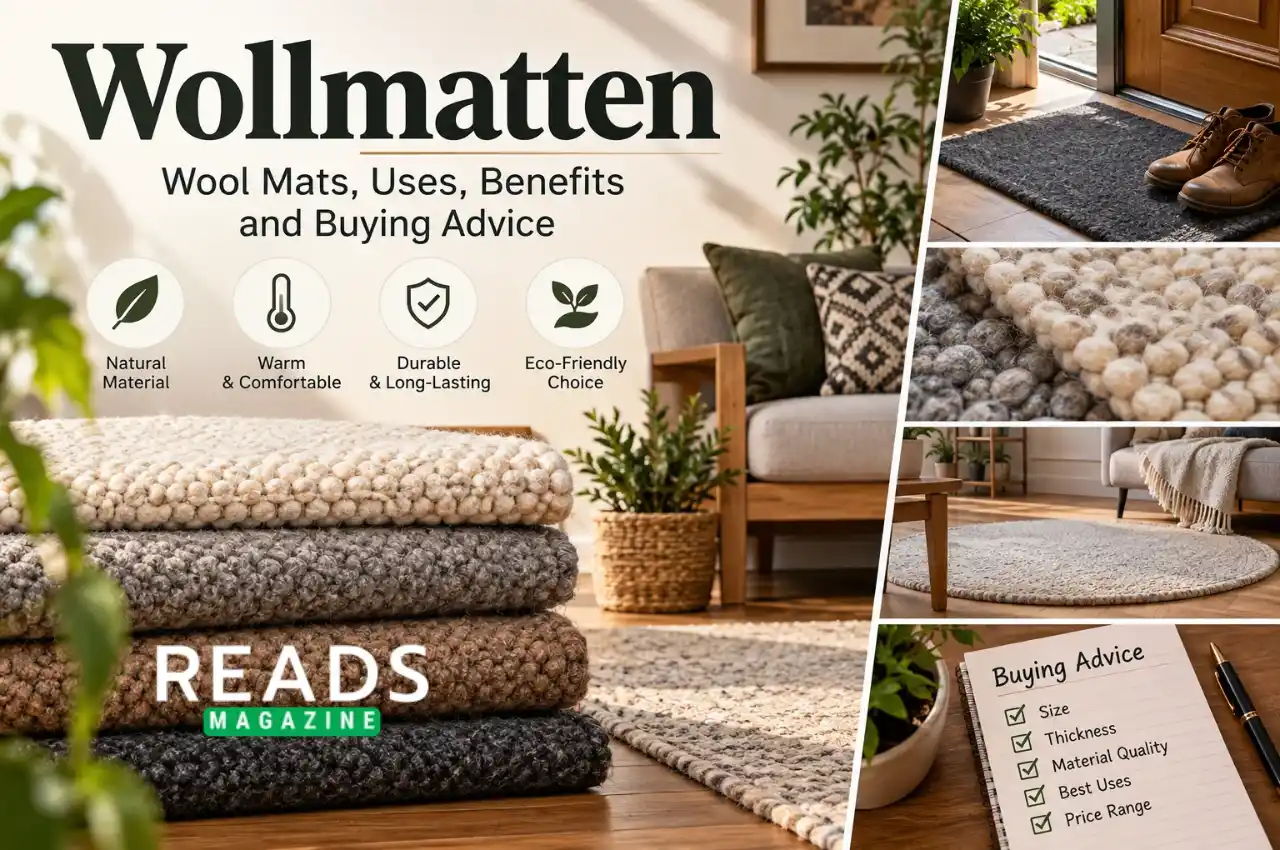
Wollmatten is the German word for wool mats. It is a general product term rather than the name of one brand, material standard or patented design. Depending on the context, it can refer to decorative floor mats, dense felt pads, sheep-wool insulation, acoustic materials, garden coverings or other products made fully or partly from wool.
That broad meaning is the reason search results can feel confusing. One retailer may use Wollmatten for a soft mat beside a bed, while another uses the same word for insulation fitted between roof joists. The most useful way to understand the term is therefore to look at the material, construction and intended job of the individual product.
Wollmatten at a Glance
Detail
Information
Term
Wollmatten
Language
German
Singular form
Wollmatte
Basic meaning
Wool mats
Main material
Usually sheep’s wool
Always 100% wool
No
Common forms
Woven, felted, pressed or needle-punched
Home use
Floor coverings, pads and decorative mats
Building use
Thermal and acoustic insulation
Garden use
Mulch and plant-protection mats
Main qualities
Warmth, cushioning and moisture management
Waterproof
Generally no
Biodegradable
Depends on the full product composition
The word alone does not tell you how thick, soft, durable or technically capable a product will be. Those details come from the manufacturer’s specification.
What Does Wollmatten Mean?
The meaning is straightforward once the German word is broken down.
Wolle means wool, while Matte means mat. The plural of Matte is Matten, so Wollmatten simply refers to wool mats. The singular form is Wollmatte.
The term does not describe one manufacturing technique. A Wollmatte can be woven like a textile, compressed into felt, mechanically bonded into a dense sheet or combined with a backing material for a particular job.
That is why two products carrying the same general name can behave very differently.
Sheep’s Wool Is the Most Common Material
Most products described as Wollmatten are based on sheep’s wool.
Wool fibres have a natural crimp, meaning they are not completely straight. That structure creates small pockets of trapped air, which is one reason wool can provide insulation and warmth.
The fibre can also take up water vapour from the surrounding air and later release it as conditions change. This moisture-buffering ability is useful in clothing, furnishings and some building materials.
None of this means every wool mat performs identically. Fibre quality, density, thickness and additional materials can all change the result.
Wollmatten Are Not Always Pure Wool
It is easy to assume that anything described as a wool mat contains nothing except wool.
That is not always true.
Some mats include polyester fibres to improve structural stability. Others use latex, rubber, cotton, adhesives, backing fabric or synthetic reinforcement. Building insulation products may also contain treatments intended to improve durability or resistance to pests.
For buyers trying to avoid synthetic materials, the percentage of wool matters more than the product name.
The material label should always be checked before purchase.
Wool Floor Mats for the Home
Decorative floor mats are one of the easiest forms of Wollmatten to recognise.
They may be placed beside beds, in living rooms, in entrance areas or on hard floors where a little extra warmth and softness is useful. Wool also adds visible texture, which makes it popular in homes that use natural materials.
A floor mat can help reduce the cold feel of tile, wood or laminate underfoot. Its soft surface may also reduce some impact noise compared with a completely bare floor.
The exact effect depends on mat thickness, construction and the surface underneath it.
Wool Mats and Rugs Are Not Always the Same Thing
Wollmatten is sometimes translated loosely as wool rugs, but the terms are not always identical.
A rug is usually understood as a decorative textile floor covering. A mat may be smaller, denser or designed for a more practical purpose such as protection, cushioning or insulation.
There is still plenty of overlap.
A small woven wool floor covering might reasonably be called either a mat or a rug depending on the seller. The product dimensions and construction are therefore more useful than arguing over the English label.
Felted Wollmatten Have Many Practical Uses
Felt is produced by binding wool fibres together into a dense material rather than weaving them into ordinary fabric.
Felted wool mats can be used beneath furniture, on work surfaces, in craft projects or as protective padding. They may also appear in specialist industrial or acoustic applications.
Density changes how felt behaves.
A softer mat can provide cushioning, while a highly compressed version may feel firmer and resist deformation more effectively. Thickness should therefore be chosen according to the job rather than appearance alone.
Sheep-Wool Insulation Is a Separate Product Category
One of the more technical uses of wool mats is building insulation.
Purpose-made sheep-wool insulation can be produced as rolls, batts or slabs designed to fit between joists, rafters or wall framing. Wool’s structure allows it to trap air, which helps slow heat transfer.
Commercial sheep-wool insulation is also used for acoustic purposes because fibrous materials can reduce the movement of sound through building cavities.
These products are engineered for construction use. A normal decorative wool mat should never be substituted simply because both contain wool.
Thermal Performance Depends on the Product
Sheep’s wool can work effectively as insulation, but buyers should look at certified thermal values rather than relying on general statements about natural wool.
Published building guidance commonly places sheep-wool insulation in a thermal-conductivity range broadly comparable with several other fibrous insulation materials. The exact figure changes with product design and density.
Thickness matters just as much.
A thin layer of good insulation will not necessarily provide the same resistance to heat flow as a thicker layer. Building calculations should therefore use the stated technical data for the exact product being installed.
Wool Can Help With Moisture Vapour
One of wool’s better-known material characteristics is its interaction with moisture.
Wool is hygroscopic, which means it can absorb water vapour from surrounding air into its fibre structure. It can later release that moisture when the environment becomes drier.
This can be useful in breathable building assemblies and indoor textiles because it allows wool to respond to changing humidity.
It should not be confused with waterproofing.
A wool mat can still become wet if exposed to liquid water, and prolonged damp conditions can create problems.
Wollmatten Are Not Waterproof
Wool’s ability to handle moisture vapour sometimes leads to exaggerated claims that it is naturally waterproof.
It is not.
A wool mat exposed to spills, rain or standing water can absorb moisture. Some finished products include water-resistant coatings or backing layers, but that performance comes from the complete product rather than untreated wool alone.
Indoor floor mats should therefore be cleaned according to their care label and dried properly after accidental wetting.
Building and garden products should also be installed only in conditions their manufacturer allows.
Wool Can Provide Some Sound Absorption
Fibrous materials can reduce sound because their structure disrupts the movement of sound energy.
This is one reason wool appears in acoustic products as well as thermal insulation. Dense mats, panels or insulation placed in suitable cavities can help reduce certain types of airborne sound.
A thin decorative mat can also soften room acoustics slightly compared with a completely hard surface.
Expectations should remain realistic, though.
Placing one wool mat on the floor will not soundproof a room. Effective sound control usually involves several parts of the building structure.
Garden Wollmatten Work Differently
Some wool mats are designed specifically for gardening.
They may be placed around plants or over soil to reduce exposed ground, slow moisture loss and make it harder for some weeds to emerge. Wool gradually breaks down under suitable outdoor conditions, adding another possible use for lower-grade sheep wool.
Garden mats can also provide a physical layer between the soil and the air, helping protect the soil surface from rapid drying.
These products should be chosen specifically for horticultural use. A wool-backed indoor floor mat may contain materials that are not intended to decompose in a garden.
Wool Mulch Mats Can Reduce Bare Soil
Mulching works by covering the soil rather than leaving it fully exposed.
A wool mat used as mulch can reduce direct sunlight reaching the ground and slow evaporation from the soil surface. The physical barrier may also suppress small weeds, particularly when it fits closely around the plant.
Results depend on thickness and installation.
Gaps around the edges can still allow weeds to grow, while very thin materials may break down more quickly than expected. Gardeners should also leave appropriate space around stems where necessary rather than wrapping plants too tightly.
Wool Mats Can Be Used Around Planters
Small horticultural wool pads are sometimes sold for pots, containers and raised beds.
These can be easier to handle than loose wool because the fibres have already been formed into a stable shape. They may help cover the compost surface and reduce moisture loss during warm weather.
Some products are designed to break down gradually, while others contain binders or reinforcement.
This is another case where checking composition is important. “Natural wool” on the front of a package does not always mean every component is natural.
Yoga and Meditation Mats Need Careful Selection
Wool is also used in mats intended for yoga, meditation and relaxation.
The material can feel warm and comfortable, particularly for seated practice or slower forms of yoga. Felted wool also provides a different texture from rubber or synthetic exercise mats.
Grip can be the limitation.
A soft wool surface may not provide the same traction as a purpose-made rubber yoga mat during faster or more demanding poses. Buyers should therefore choose a product actually designed for their preferred activity rather than assuming any wool floor mat will work.
Wool Naturally Resists Ignition Better Than Many Fibres
Wool has useful natural fire behaviour.
It requires relatively high temperatures to ignite, tends to smoulder rather than support rapid flame, and does not melt and drip in the way some synthetic fibres can.
That makes wool attractive for furnishings and certain technical products.
It should not be interpreted as meaning every Wollmatte is fireproof. Backing materials, binders and treatments can change how a finished product behaves, and building materials must meet the relevant safety requirements for their intended use.
Natural Does Not Automatically Mean Sustainable
Wool is renewable because sheep produce a new fleece after shearing.
That gives it an advantage over materials produced entirely from finite fossil resources, but the environmental picture is more complicated than the word “natural” suggests.
Sheep farming uses land and resources. Processing, washing, dyeing and transporting wool also have environmental effects. A finished mat may contain synthetic backing or binders that affect recyclability and biodegradability.
Durability matters too.
A well-made mat used for many years may have a very different overall impact from a poorly made product that needs frequent replacement.
Not Every Wollmatte Is Biodegradable
Pure untreated wool can biodegrade under suitable conditions.
The same cannot automatically be said for every finished mat.
A product with a rubber base, synthetic stitching, polyester binder or plastic coating may leave non-wool components behind. Strong chemical treatments can also affect disposal options.
Gardeners in particular should check whether a product is specifically sold as compostable or biodegradable before leaving it to break down in the soil.
A wool percentage alone does not answer that question.
Wool Can Attract Clothes Moths
Natural wool can be damaged by insects such as clothes moths and carpet beetles.
The larvae feed on keratin-containing animal fibres, which means stored wool products can be vulnerable under the right conditions.
Regular cleaning and inspection help reduce the risk in household mats. Long-term storage should be dry and clean, with the product protected appropriately.
Some commercial insulation products use treatments intended to reduce insect damage.
Those treatments vary by manufacturer, so buyers should read the technical information instead of assuming all sheep-wool insulation is processed in the same way.
Cleaning Depends on Construction
There is no single cleaning method that works for every wool mat.
A small washable mat may tolerate gentle cleaning, while a dense felt product or large woven floor mat may require spot cleaning or professional care. Backing materials can also determine whether a mat can be soaked safely.
For routine floor care, loose dust and dirt should usually be removed before they work deeper into the fibres.
Spills are generally easier to deal with when treated promptly.
Strong rubbing can distort some wool surfaces, so blotting and following the product’s care instructions is usually safer than aggressive scrubbing.
Hot Water Can Cause Problems
Wool fibres can shrink or felt further when exposed to certain combinations of heat, moisture and agitation.
That means washing a wool mat in very hot water without checking the care label can permanently change its dimensions or texture.
Machine washing should never be assumed to be safe.
The construction matters as much as the fibre. A mat may contain wool that could tolerate gentle washing but still have a backing or adhesive that cannot.
When the manufacturer specifies professional cleaning, there is usually a practical reason for doing so.
Drying Properly Is Important
Leaving wool damp for too long can create odour and other problems.
After cleaning, a mat should be dried according to the maker’s guidance with good airflow. Some products are better dried flat so their shape is not distorted.
High heat can be risky.
Tumble dryers, radiators or direct intense heat may shrink or damage certain wool products. Slow, controlled drying is generally safer unless the care instructions specifically allow another method.
Large wool rugs may be difficult to dry thoroughly at home, which is one reason professional cleaning can be worthwhile.
How Long Do Wollmatten Last?
There is no universal lifespan.
A high-quality indoor wool mat that receives moderate use and proper cleaning can last for many years. A thin mat placed in a busy entrance may wear much faster, especially if exposed to grit, shoes and repeated moisture.
Garden mats are often designed with a very different goal.
Instead of lasting indefinitely, some are intended to break down gradually outdoors. Building insulation is at the opposite end of the scale and is manufactured for long service inside a protected structure.
The intended lifespan should therefore match the intended use.
Thickness and Density Matter When Buying
Two mats of the same dimensions can perform very differently if their thickness and density are not the same.
A thicker floor mat may provide more cushioning, while a dense felt pad can offer firmer protection even without being especially thick. Building insulation requires its own specified density and thermal performance.
Weight can offer clues about how much material is present, but it should not replace technical specifications.
For online purchases, look beyond the product photos. Dimensions, thickness, fibre percentage, weight and construction provide a much clearer picture of what will arrive.
Check the Backing Before Using a Floor Mat
A beautiful wool surface can still slide on a smooth floor.
Some mats include a non-slip backing, while others require a separate underlay. The choice may depend on whether the floor is wood, tile, laminate or another material.
Certain rubber or latex backings can also interact with sensitive floor finishes over long periods.
If protecting an expensive floor is important, check compatibility before leaving the mat in place permanently.
A suitable rug pad can improve grip while also reducing movement and wear.
Colour and Dyeing Can Change the Product
Wool accepts dyes well, which is why Wollmatten are available in everything from natural cream and brown tones to strong decorative colours.
Undyed wool may appeal to buyers who prefer a more natural appearance, but colour alone does not reveal whether other treatments have been used.
Dyed products can also vary in colourfastness.
A mat placed in strong sunlight may fade over time, and some dyes can behave differently during wet cleaning. Care information should be checked before using aggressive cleaning products.
How to Choose the Right Wollmatte
Start with the job the mat needs to perform.
For a living room, appearance, softness, grip and cleaning requirements are likely to matter most. For insulation, thermal ratings, thickness, fire performance and suitability for the building assembly become much more important.
Garden buyers should look at biodegradability, expected outdoor lifespan and whether the product contains synthetic backing. Exercise users should focus on comfort, grip and dimensions.
Choosing by purpose prevents most purchasing mistakes because Wollmatten is simply too broad a term to tell you everything you need to know.
Price Depends on More Than Wool Content
Wool mats can vary widely in price.
Factors include wool quality, density, manufacturing method, size, country of production, dyeing, backing and whether the item is handmade or industrially produced. Technical insulation and specialist acoustic products are priced differently from decorative household mats.
A higher wool percentage can affect price, but it does not automatically make one product better for every application.
A pure-wool mat that slides badly may be less useful as an entrance mat than a blended product with a properly designed backing.
Value should be judged according to purpose.
Wollmatten Versus Synthetic Mats
Synthetic mats often cost less and may offer advantages in wet areas or places where easy washing matters.
Wool provides a different set of qualities. It feels naturally warm, manages moisture vapour, has resilient fibres and offers useful fire behaviour without relying entirely on added treatments.
Neither material wins every comparison.
A synthetic outdoor mat may make more sense beside a muddy entrance, while a wool mat may be more comfortable beside a bed. In building work, technical specifications should decide the choice rather than a simple natural-versus-synthetic argument.
Frequently Asked Questions About Wollmatten
What are Wollmatten?
Wollmatten are wool mats. The German term can describe many wool-based products, including floor mats, felt pads, insulation materials and garden coverings.
What is the singular form of Wollmatten?
The singular form is Wollmatte.
Are Wollmatten always made from sheep’s wool?
Sheep’s wool is the most common material, but some products include synthetic fibres, backing materials, adhesives or other components.
Can Wollmatten be used for insulation?
Yes, specially manufactured sheep-wool insulation mats, batts and rolls can be used in buildings. Decorative floor mats should not be used as a substitute for approved insulation products.
Are wool mats waterproof?
Generally no. Wool can manage moisture vapour, but it can still absorb liquid water.
Are Wollmatten good for sound insulation?
Purpose-made wool insulation and acoustic products can help absorb sound. A decorative floor mat can soften room acoustics but should not be expected to soundproof a space.
Can Wollmatten be used in gardens?
Yes. Some wool mats are made specifically for mulching, plant protection and soil coverage. Buyers should check that the chosen product is intended for outdoor use.
Are Wollmatten biodegradable?
Pure untreated wool can biodegrade, but a finished mat may contain synthetic fibres, coatings or backing. Check the full material specification.
Do wool mats attract moths?
Untreated animal fibres can be vulnerable to clothes moth larvae and carpet beetles. Keeping household wool clean and inspecting stored products helps reduce the risk.
How do you clean a Wollmatte?
Cleaning depends on the product. Some allow gentle washing, while others require spot cleaning or professional care. Always follow the manufacturer’s instructions.
Are wool mats fireproof?
No. Wool naturally resists ignition better than many common fibres, but a finished wool mat should not automatically be described as fireproof.
Are Wollmatten expensive?
Prices vary greatly according to size, wool quality, density, construction and intended use. Decorative, garden and building products belong to very different price categories.
Wollmatten: Choose the Product, Not Just the Material
Wollmatten sounds like one specific type of mat, but the German word actually covers a wide family of wool-based products. A decorative floor covering, a felt furniture pad, a biodegradable garden mat and a building-insulation batt may all fit the basic description while having almost nothing else in common.
Wool brings useful natural qualities such as warmth, resilience, moisture buffering and resistance to rapid ignition, but those properties do not remove the need to check product specifications. Thickness, density, backing, fibre blends and treatments determine how a finished mat actually performs.
The best buying decision therefore starts with the intended use. Once you know whether you need comfort underfoot, building insulation, garden coverage or another function, it becomes much easier to compare the Wollmatten designed for that particular job.

















Comments are off for this post.