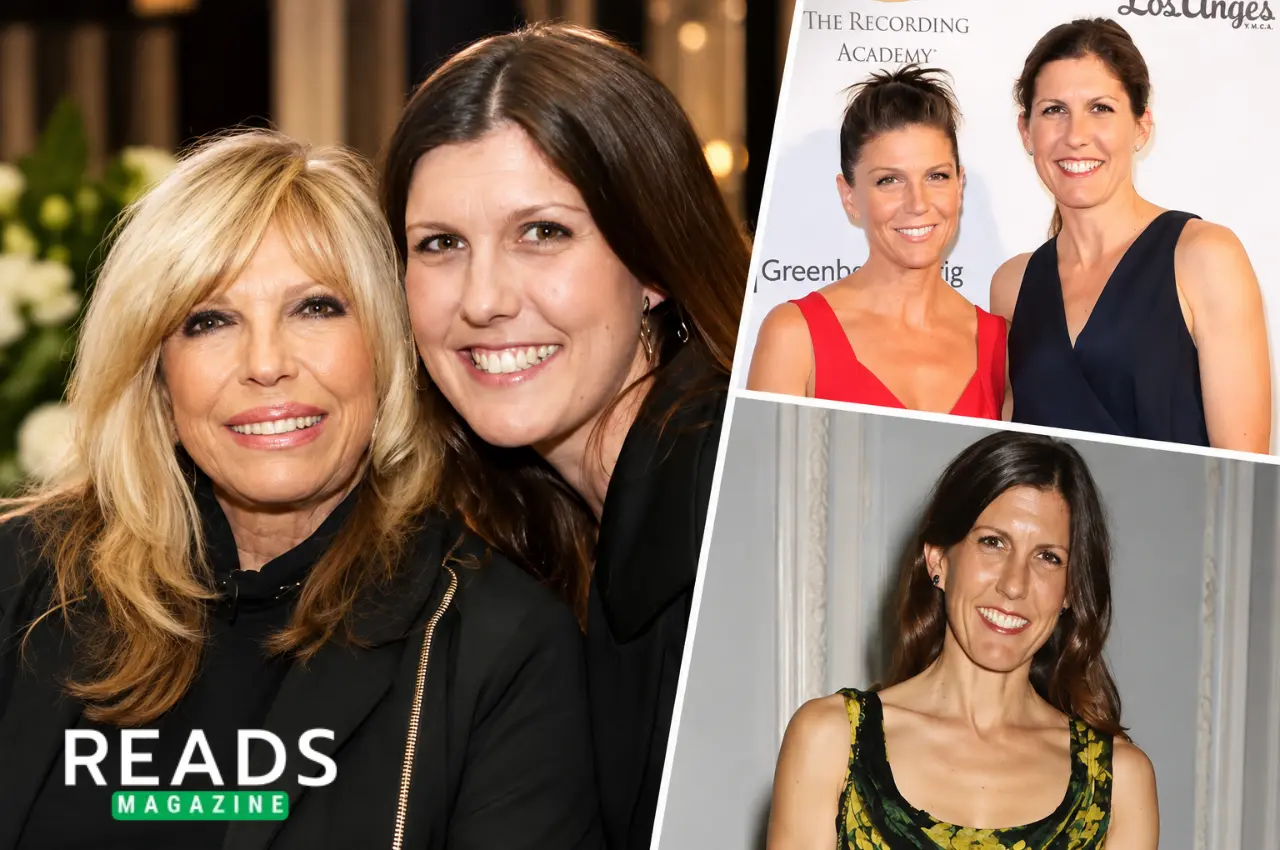
Amanda Kate Lambert is best known as Frank Sinatra’s granddaughter and Nancy Sinatra’s younger daughter, but her own career developed far away from the microphone. Professionally known as Amanda Erlinger, she has worked as an artist, photographer, curator and family archivist, helping preserve and present decades of Sinatra photographs and visual history.
That work gives her a much clearer identity than the usual “famous granddaughter” label suggests. Amanda helped organize Frank Sinatra’s photographic archive, worked on major exhibitions celebrating his centennial, contributed to an ambitious collector’s book about him and later co-authored a large visual retrospective about her mother, Nancy Sinatra. Her career has therefore centered on images, memory and preservation rather than performance.
Amanda Kate Lambert at a Glance
Detail
Information
Commonly searched name
Amanda Kate Lambert
Documented earlier name
Amanda Katherine Lambert
Professional name
Amanda Erlinger
Mother
Nancy Sinatra
Father
Hugh Lambert
Maternal grandfather
Frank Sinatra
Maternal grandmother
Nancy Barbato Sinatra
Sister
Angela Jennifer “AJ” Lambert
Main work
Art, photography, curation and archive preservation
Major Frank Sinatra project
SINATRA
Major Nancy Sinatra project
Nancy Sinatra: One for Your Dreams
Husband
Michael Erlinger
Exact net worth
Not publicly verified
Public profile
Creative but relatively private
Amanda belongs to one of America’s most famous entertainment families, yet much of her professional work takes place behind the scenes. That difference is what makes her story interesting.
Frank Sinatra Was Her Grandfather Before He Was an Icon
For the rest of the world, Frank Sinatra was one of the defining singers and entertainers of the 20th century. To Amanda, he was first simply her grandfather.
In later interviews, Amanda recalled swimming with him, learning to dive, traveling with him and spending time in his art studio. She described growing up without fully separating the family version of Frank from the international celebrity seen by the public.
That personal connection later became important professionally.
When Amanda began working through family photographs, she was not approaching the archive as an outside historian. She already knew many of the people, places and stories represented in the images.
That gave her work a family perspective that an ordinary commercial archive could not easily reproduce.
Nancy Sinatra Is Amanda’s Mother
Amanda is the younger daughter of Nancy Sinatra and choreographer Hugh Lambert.
Nancy became a major recording star during the 1960s, particularly through songs such as “These Boots Are Made for Walkin’,” “Sugar Town” and her duet with Frank Sinatra, “Somethin’ Stupid.”
She also developed a strong visual identity through fashion, television and photography.
That visual side of Nancy’s career later became especially relevant to Amanda.
Rather than following her mother directly into singing, Amanda eventually helped organize and present photographs from Nancy’s long career, turning her own visual interests into a way of documenting her mother’s work.
Hugh Lambert Brought Another Creative Influence
Amanda’s father, Hugh Lambert, worked as a dancer and choreographer.
Nancy Sinatra married Hugh in 1970, and they had two daughters together: AJ and Amanda. Hugh died in 1985.
His career added another creative discipline to the household.
Amanda therefore grew up surrounded not only by music but also by dance, choreography, photography, painting and film. Her eventual decision to focus on visual art fits naturally within that wider family environment even though it differed from the singing careers most closely associated with the Sinatra name.
AJ Lambert Is Her Older Sister
Amanda’s older sister is Angela Jennifer Lambert, usually known as AJ Lambert.
AJ chose a more musical path. She spent years playing in bands before eventually releasing solo material and performing interpretations of songs associated with her grandfather.
That creates an interesting contrast between the sisters.
AJ engaged more directly with the family’s musical heritage, while Amanda became increasingly connected with photography, artwork and archival preservation.
Both remained tied to the same history, but they approached it through different creative disciplines.
Amanda’s Exact Birth Date Deserves Some Caution
Many current biographies give March 17, 1976 as Amanda’s birth date.
That date appears repeatedly in recent profiles, and a 2015 Los Angeles Times report described Amanda as 39 at the time, which broadly fits a 1976 birth year.
However, older reporting creates some uncertainty around the exact timeline.
In December 1990, a letter published by Amanda herself in the Los Angeles Times described her as 15 years old. That would point toward a 1975 birth year unless the age in the letter or later report was approximate.
Because of that conflict, it is safer not to present an exact birthday as completely settled without qualification.
What is clear is that Amanda was born in the mid-1970s.
Her Formal Name Has Also Been Reported Differently
“Amanda Kate Lambert” is the name most people search today.
A stronger historical record gives a slightly different version.
When Frank Sinatra’s will was filed for probate in 1998, the Los Angeles Times identified his granddaughter as Amanda Katherine Lambert.
That record is useful because it comes from legal estate documentation rather than a later celebrity biography.
In her professional work, she is generally identified as Amanda Erlinger.
So readers may encounter Amanda Kate Lambert, Amanda Katherine Lambert and Amanda Erlinger while researching the same person.
She Chose Visual Art Rather Than Singing
Amanda never built a major public singing career.
That choice stands out because music surrounds almost every branch of her maternal family. Frank Sinatra became an international icon, Nancy built her own recording career and AJ later became a singer and musician.
Amanda’s strongest professional identity is different.
She worked with photography, painting, art exhibitions and archival material rather than trying to extend the Sinatra recording legacy through another voice.
This allowed her to remain closely connected with the family’s cultural history without repeating the careers of the people before her.
Frank Sinatra Also Loved Painting
Amanda’s visual interests had a direct connection with her grandfather.
Frank Sinatra painted throughout much of his life and maintained an art studio at his Rancho Mirage home. Amanda later remembered spending significant time there with him.
She has described Frank teaching her to work with painting materials and stressing the importance of caring for brushes, palette knives and other tools.
The lesson was practical but also personal.
Frank expected her to respect the materials and clean up after herself rather than assuming someone else would handle the work.
Amanda later carried that same attention to objects and preservation into photography and archive management.
Photography Became a Major Professional Direction
Amanda eventually became known as an artist and photographer.
She participated in art exhibitions and developed a professional identity separate from her family’s music.
A 2006 Los Angeles Times report, for example, listed Amanda Erlinger among artists included in a Palm Springs exhibition featuring photographic and visual interpretations of classic Hollywood imagery.
Her work was therefore not limited to organizing family photographs.
She had her own connection to photography and visual art before the Sinatra centennial projects brought her archival role much wider attention.
She Began Organizing the Sinatra Photo Archive
One of Amanda’s most important projects began quietly.
Frank Sinatra Enterprises and members of the family possessed hundreds of photographs stored across folders, envelopes and private collections. Amanda began physically sorting and digitally scanning those materials.
She also worked with her grandmother, Nancy Barbato Sinatra, to identify dates, locations and people in older images.
That process uncovered photographs that had rarely or never been seen outside the family.
The value was not simply in finding attractive pictures. Organizing the archive helped connect visual material with family history and made it possible to preserve fragile originals digitally.
Family Memory Helped Identify the Photographs
Archival photography becomes much harder when the people who remember the events are gone.
Amanda recognized that early.
She asked her grandmother questions about where images had been taken, when they were made and who appeared in them. Those conversations often led to additional photographs stored in private albums.
The result was a much richer archive than a collection of unlabeled celebrity photographs.
Images of Frank Sinatra could be understood as family documents as well as publicity material.
That distinction became central to the way Amanda later presented her grandfather’s life publicly.
SINATRA Became a Major Publishing Project
Amanda’s archival work eventually contributed to the luxury book SINATRA.
Published around Frank Sinatra’s centennial in 2015, the large-format volume brought together rare photographs, family material and contributions from major figures connected with his life and influence.
Amanda Erlinger was credited as a curator and compiler of the book.
The project included photographs from the family archive alongside work by major photographers who had documented Sinatra professionally.
That combination allowed readers to see both versions of him: the global entertainer and the person known privately by his family.
Famous Contributors Added Their Memories
The SINATRA book was not simply a photo album.
It included contributions associated with figures such as Martin Scorsese, Paul McCartney, George Clooney, Quincy Jones, Tony Bennett and Elvis Costello.
Their participation reflected the extraordinary range of Sinatra’s influence.
Amanda’s role was different.
She helped supply the intimate visual material that outsiders could not provide. The family archive included photographs of ordinary moments, private travel, early life and personal relationships that balanced the polished professional images.
That contrast became one of the strongest aspects of the project.
Amanda Helped Curate Sinatra Exhibitions
The centennial celebrations also brought Amanda into exhibition work.
In 2015, major institutions and galleries presented Sinatra photographs, memorabilia and personal items around what would have been his 100th birthday.
Amanda participated in that work as a curator and family representative.
At Proud Chelsea in London, she helped present Sinatra at 100: A Century in the Making, an exhibition combining private family photographs with images by professional photographers.
Her involvement gave audiences more than a celebrity retrospective.
She could explain why particular photographs mattered inside the family as well as why they were historically interesting.
The Grammy Museum Also Recognized Her Role
Amanda’s archival work extended into larger cultural institutions.
During Frank Sinatra’s centennial year, she appeared in discussions connected with the Grammy Museum and other organizations examining his cultural influence.
She was professionally identified as an artist, photographer and fine-art and photography curator associated with Frank Sinatra Enterprises.
That title is important because it shows that her involvement was not simply ceremonial.
Amanda was working directly with the visual materials connected with Sinatra’s legacy.
Her position placed her between the family and the institutions trying to tell his story accurately.
Frank Sinatra’s Early Self-Portraits Were Part of the Archive
One particularly interesting part of the collection involved photographs Frank took himself.
Long before smartphone selfies, Sinatra experimented with self-portraits and photography during his early career.
Some of those images later appeared in centennial exhibitions and publishing projects.
They provide a different view of him from the polished publicity portraits made by professional photographers.
For Amanda, material such as this helped show that Frank was visually curious as well as musically driven.
It also connected naturally with her own interests in photography and art.
She Spoke About the Private Frank Sinatra
Amanda’s interviews around the 2015 centennial often focused on separating Frank Sinatra the icon from Frank Sinatra the grandfather.
She remembered ordinary family activities such as swimming, painting and traveling.
Those recollections are valuable because they avoid turning every family memory into a story about fame.
Amanda has said that she did not initially think of him through the labels the public used for him.
To her, he was Grandpa.
That perspective became central to her archival work because it encouraged audiences to look beyond the stage persona and consider the person visible in private photographs.
She Gave a Eulogy at Frank Sinatra’s Vigil
Amanda’s relationship with her grandfather was visible publicly when Frank died in May 1998.
At the private vigil held before his funeral, Amanda gave a eulogy alongside her mother Nancy and Tony Bennett.
Contemporary Los Angeles Times coverage reported that the remarks included personal anecdotes that brought both tears and laughter to those attending.
Amanda was still a young woman at the time.
Her role in the service showed how close she was to her grandfather years before her later archive projects made that relationship part of her professional work.
Frank Sinatra’s Will Included His Granddaughters
Frank also made financial arrangements for Amanda and AJ.
His 1991 will, filed publicly after his death, directed USD 1 million into a trust that had already been established for the two daughters of Nancy Sinatra Lambert.
The money was to be allocated between separate trusts for Angela Jenifer Lambert and Amanda Katherine Lambert.
This fact is sometimes distorted in online net-worth articles.
A USD 1 million contribution divided between two existing trusts does not mean Amanda personally received a USD 1 million cash inheritance or that her current net worth can be calculated from that document.
The estate record establishes a family provision, not a modern wealth estimate.
Amanda Kate Lambert Net Worth Is Not Public
Amanda’s current net worth is not reliably documented.
Recent biography sites sometimes assign her several million dollars based on Frank Sinatra’s estate, her family background or assumptions about her professional work.
Those calculations are not supported by enough financial information.
A trust contribution made decades ago does not reveal its later investment performance, distributions or current ownership. Nor does it tell us about Amanda’s home, debts, investments, professional income or shared marital assets.
Her finances remain private.
The documented inheritance information is interesting family history, but it should not be converted into a fictional exact fortune.
She Is Married to Michael Erlinger
Amanda is publicly known professionally as Amanda Erlinger, reflecting her married surname.
Her husband is Michael Erlinger.
Their marriage is much less documented in entertainment media than the marriages of many celebrity-family members, but arts and institutional records repeatedly list Amanda and Michael together.
They have also supported museum and cultural projects as a couple.
That continued involvement suggests that visual culture and preservation remain part of Amanda’s life well beyond the projects directly connected with Frank Sinatra.
She has never made her marriage a major part of her public image.
Amanda and Michael Support Art Institutions
Later museum records show Amanda and Michael Erlinger supporting visual arts institutions.
Palm Springs Art Museum has listed them among supporters of major exhibitions, including programs focused on modern design and architecture.
That connection fits naturally with Amanda’s long-standing artistic interests.
It also shows that her public activity did not end once the Frank Sinatra centennial passed.
Her relationship with museums, photography and design has continued in quieter ways that receive far less entertainment coverage than her family name.
Palm Springs Has Strong Family Importance
The Coachella Valley and Palm Springs area carry deep meaning for the Sinatra family.
Frank Sinatra maintained a home in Rancho Mirage, and the family spent considerable time in the desert.
Amanda later described herself as a resident of the Coachella Valley and publicly supported preservation of local mid-century architecture.
In a 2015 message to Palm Springs officials, she referred to her family’s long history in the area and argued against demolition of an important Hugh Kaptur building.
That advocacy connects her personal family history with a broader interest in architecture and preservation.
Nancy Sinatra: One for Your Dreams Extended Her Archive Work
Amanda later turned her attention toward her mother’s career.
She worked with David Wills on Nancy Sinatra: One for Your Dreams, a large-format visual retrospective published in the early 2020s.
The book brings together images spanning Nancy’s music, films, fashion, family life and work with veterans.
Many photographs were scanned and restored from original negatives and transparencies.
The project also includes an extended interview with Nancy conducted by Amanda.
That made the book both a professional collaboration and a mother-daughter project.
The Nancy Sinatra Book Shows How Amanda’s Role Evolved
Working on her mother’s book was a natural extension of Amanda’s earlier archival work.
With Frank, she helped reveal photographs that showed the private person behind one of the most famous public images in music.
With Nancy, she helped organize another major career through photographs, family records and personal memories.
The projects also demonstrate that archive preservation can be creative work.
Selecting images, identifying dates, restoring photographs and deciding how to present decades of history all require editorial judgment.
Amanda’s role sits somewhere between artist, family historian and curator.
She Has Never Tried to Become Another Sinatra Singer
Amanda’s decision not to pursue a music career is one of the clearest differences between her and several relatives.
Frank Sinatra built the original family musical legacy. Nancy became a major artist herself. Frank Sinatra Jr. performed and conducted, while AJ Lambert later developed her own recording career.
Amanda stayed largely within visual culture.
There is no established solo discography or major singing career attached to her name.
That should not be interpreted as avoiding the family legacy.
In many ways, her archival work has become one of the methods through which that legacy remains accessible.
Her Work Preserves More Than Celebrity Photographs
Family archives have historical value beyond fame.
Photographs can document clothing, architecture, travel, family relationships, performance spaces and changes in American culture.
The Sinatra archive contains all of those layers.
Amanda’s work preserving and identifying images therefore contributes to a record extending beyond one singer’s career.
That is especially true as original family members age and memories that explain older photographs become harder to recover.
Digitizing and documenting the material while those connections are still available protects information that could otherwise disappear.
Her Public Profile Remains Relatively Low-Key
Despite working on major cultural projects, Amanda does not behave like a conventional celebrity.
She rarely becomes the subject of entertainment interviews unrelated to art or family archives. Details about her everyday routine, home life and private relationships are not regularly published.
That relative privacy helps explain why recent biography websites often pad her story with uncertain personal claims.
There is no need to do that.
Her documented professional work provides more than enough material to understand who she is without inventing private details.
Frank Sinatra’s Granddaughter Built Her Own Creative Role
Amanda’s career does not compete with her grandfather’s.
It works in a completely different medium.
Frank created performances that became part of American cultural history. Amanda later helped preserve photographs showing the person and family surrounding those performances.
That distinction gave her room to develop her own professional identity without pretending the Sinatra name had no influence.
Her career is closely connected with her heritage, but the skills involved in photography, curation and archive management are genuinely her own.
Frequently Asked Questions About Amanda Kate Lambert
Who is Amanda Kate Lambert?
Amanda Kate Lambert, professionally known as Amanda Erlinger, is an artist, photographer, curator and archivist. She is Nancy Sinatra’s daughter and Frank Sinatra’s granddaughter.
Is Amanda Kate Lambert Frank Sinatra’s granddaughter?
Yes. Frank Sinatra was her maternal grandfather. Her grandmother was his first wife, Nancy Barbato Sinatra.
Who are Amanda Kate Lambert’s parents?
Her parents are singer Nancy Sinatra and the late dancer and choreographer Hugh Lambert.
Who is Amanda Lambert’s sister?
Her older sister is musician Angela Jennifer “AJ” Lambert.
What does Amanda Kate Lambert do?
Her best-documented work involves photography, visual art, curation and preservation of family archives. She has worked extensively with Frank Sinatra’s photographic collection.
Is Amanda Kate Lambert a singer?
She is not known for a professional singing career. Her creative work has focused much more strongly on visual art and photography.
What is Amanda Kate Lambert’s real name?
Frank Sinatra’s probate record identified her as Amanda Katherine Lambert. She is widely searched as Amanda Kate Lambert and professionally uses Amanda Erlinger.
How old is Amanda Kate Lambert?
She was born in the mid-1970s. Several sources place her birth in 1976, although older reporting creates some uncertainty around the exact date.
Who is Amanda Kate Lambert’s husband?
She is married to Michael Erlinger and uses Amanda Erlinger professionally.
Did Amanda inherit money from Frank Sinatra?
Frank Sinatra’s will added USD 1 million to an existing trust for Amanda and her sister AJ, to be divided between their separate trusts.
What is Amanda Kate Lambert’s net worth?
Her current personal net worth is not publicly verified. Online estimates based on the Sinatra estate should be treated as speculation.
What books has Amanda Erlinger worked on?
She helped create the 2015 SINATRA collector’s book and later co-authored Nancy Sinatra: One for Your Dreams with David Wills.
Amanda Kate Lambert: Preserving the Sinatra Story in Images
Amanda Kate Lambert inherited one of the most recognizable names in American entertainment, but she found a way to work with that history without copying the careers that came before her. Photography, painting, curation and archive preservation became her tools rather than records and concert stages.
Her strongest contribution has been making private visual history usable and accessible. By sorting, scanning and identifying family photographs, she helped turn boxes of personal material into exhibitions, books and cultural records that show Frank Sinatra as both an entertainer and a grandfather. She later applied the same careful approach to her mother’s career.
That work gives Amanda a clear place within the Sinatra story. She is not simply the granddaughter of a famous singer. She has become one of the people responsible for preserving how future audiences will actually see him.













Comments are off for this post.