Pregnancy can make an already troublesome wisdom tooth feel like a much bigger decision. If the tooth suddenly becomes painful, swollen, or infected, you may wonder whether having it removed could put the pregnancy at risk—or whether waiting several months could make the dental problem worse.
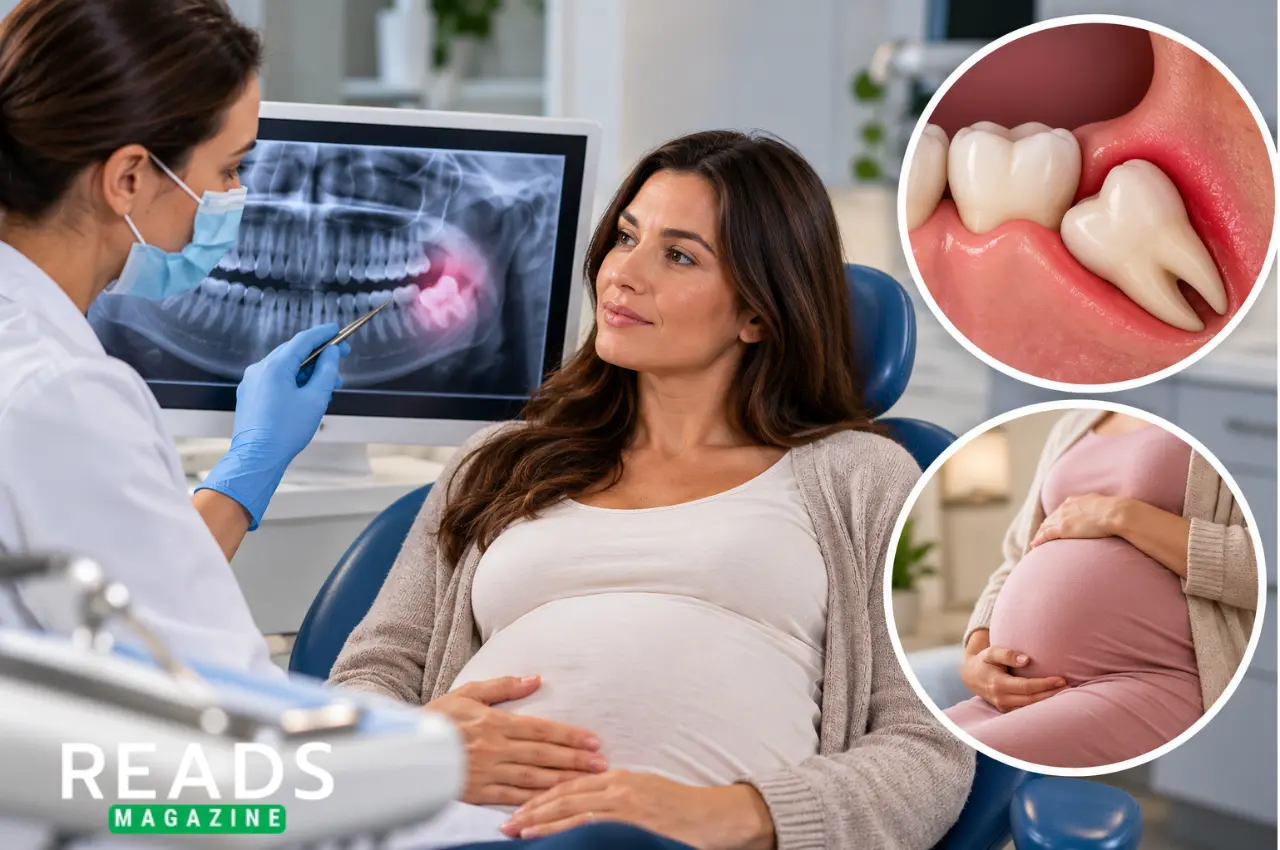
A wisdom tooth can be removed during pregnancy when the extraction is medically necessary. Pregnancy itself is not a reason to leave a painful infection, abscess, or seriously damaged tooth untreated. Dental professionals can use local anesthesia and, when needed, diagnostic dental X-rays while taking pregnancy into account.
The situation is different when a wisdom tooth is not causing any immediate problem. If removal is purely elective, the dentist or oral surgeon may recommend waiting until after delivery rather than performing an unnecessary procedure during pregnancy.
The decision therefore depends less on the fact that you are pregnant and more on why the tooth needs to come out, how urgently it needs treatment, how far along the pregnancy is, and what type of anesthesia or medication may be required.
When Does a Wisdom Tooth Need to Be Removed During Pregnancy?
Wisdom teeth do not automatically need to be removed just because they are impacted or have not fully erupted. Many can be monitored if they are not causing problems.
Removal becomes more important when the tooth is causing active disease or significant symptoms. A partially erupted wisdom tooth can create a pocket where bacteria and food collect, leading to inflammation or infection around the gum. This condition is often called pericoronitis.
A dentist may consider extraction during pregnancy when there is:
persistent or severe tooth pain
repeated infection around the wisdom tooth
swelling of the gum, jaw, or face
a dental abscess
significant tooth decay that cannot reasonably be restored
damage to a neighboring tooth
difficulty opening the mouth because of infection or inflammation
infection that is spreading rather than improving
Leaving an active dental infection untreated simply to avoid dental treatment during pregnancy can create its own risks. In urgent situations, treating the source of the problem is generally more appropriate than waiting for a particular trimester.
When Can Removal Usually Wait?
Not every wisdom tooth needs immediate treatment.
Suppose an X-ray taken before pregnancy showed an impacted wisdom tooth, but it is not painful, infected, decayed, or damaging surrounding teeth. In that situation, there may be no medical benefit to removing it while pregnant.
Elective wisdom tooth surgery can often be postponed until after the baby is born, particularly when the procedure is expected to be complicated or may require sedation beyond simple local anesthesia.
A useful way to think about the decision is:
Situation
Typical Approach
Wisdom tooth causes no symptoms
Often monitored until after pregnancy
Mild occasional discomfort without infection
Dentist evaluates whether treatment can wait
Recurrent gum infection
Treatment may be recommended during pregnancy
Severe pain
Prompt dental assessment is appropriate
Dental abscess or spreading infection
Should not simply be postponed because of pregnancy
Tooth damaging another tooth
Removal may be recommended depending on severity
Purely preventive removal
Often delayed until after delivery
These are general principles rather than personal treatment instructions. The actual decision should be made after the dentist examines the tooth and considers the pregnancy.
Which Trimester Is Best for Wisdom Tooth Removal?
There is no trimester in which necessary dental treatment suddenly becomes forbidden. If a wisdom tooth is seriously infected or causing an urgent problem, it can be treated when the problem occurs.
For treatment that needs to be done but is not an emergency, the second trimester is often considered a convenient time. Early-pregnancy nausea may have improved, and lying back in a dental chair is usually more comfortable than it can become later in pregnancy.
First Trimester
The first trimester covers an important period of fetal development, which understandably makes many pregnant patients particularly cautious about medications and procedures. Morning sickness, nausea, and a stronger gag reflex may also make dental work less comfortable.
That does not mean a necessary extraction must be postponed. Severe infection or significant dental pain should still be evaluated and treated appropriately.
If the tooth is stable and the extraction is optional, however, there may be little reason to schedule elective surgery during this stage.
Second Trimester
The second trimester is frequently the most practical period for dental procedures that cannot comfortably wait until after delivery.
Morning sickness has often eased, the abdomen is not yet as large as it will be later in pregnancy, and spending time in the dental chair may be easier.
This is why people often hear that the second trimester is the “best” time for dental work. That description is mostly about convenience and planning rather than implying that urgent dental treatment is unsafe at every other stage.
Third Trimester
Necessary dental work can still be performed in the third trimester, but long appointments may become physically uncomfortable.
As pregnancy advances, lying flat on the back for an extended period can be uncomfortable and may affect circulation in some patients. The dental team can adjust chair positioning and may keep appointments as efficient as possible.
If a wisdom tooth is not causing trouble and removal can safely wait a few more weeks, postponing elective surgery until after delivery may be more comfortable.
Pregnancy Stage and Dental Treatment at a Glance
Stage
What Usually Matters
First trimester
Necessary treatment can be performed, while purely elective work may be postponed
Second trimester
Often a convenient period for needed non-emergency dental treatment
Third trimester
Necessary care remains possible, but long appointments may be uncomfortable
Any trimester with infection or severe pain
Prompt evaluation is more important than waiting for an “ideal” trimester
After delivery
Often preferred for completely elective wisdom tooth removal
The distinction between urgent and elective treatment is more useful than simply deciding that all dental procedures belong in one particular trimester.
Is Local Anesthesia Safe During Pregnancy?
Most wisdom tooth extractions are performed using local anesthesia, which numbs the area around the tooth while you remain awake.
Local anesthetics commonly used in dentistry can be used during pregnancy when clinically appropriate. Lidocaine is one of the most familiar examples, and dental professionals choose the type and dose according to the patient’s health and the procedure being performed.
This is important because avoiding anesthesia is not a safer alternative. Trying to perform a painful extraction without adequate numbing would cause unnecessary pain and stress.
Make sure the dentist or oral surgeon knows that you are pregnant, how many weeks pregnant you are, what medications you take, and whether the pregnancy has been classified as high risk.
What About Epinephrine in Dental Anesthetic?
Some local dental anesthetics contain a small amount of epinephrine. It helps the anesthetic remain effective in the treatment area for longer and can reduce bleeding around the procedure site.
Pregnancy does not automatically mean that every anesthetic containing epinephrine must be avoided. Dental professionals routinely choose local anesthetic formulations and doses according to the patient’s medical circumstances.
The important point is not to decide for yourself which anesthetic should or should not be used. Tell the dental team about the pregnancy so they can select an appropriate option.
Can You Have Dental X-Rays While Pregnant?
A dentist often needs an X-ray before removing a wisdom tooth because the image shows how the tooth is positioned beneath the gum and how its roots relate to nearby structures.
Dental X-rays use a very small amount of radiation and the beam is directed at the mouth rather than the abdomen. When an X-ray is necessary for diagnosis or treatment, pregnancy does not automatically prevent it from being taken. Professional guidance considers necessary dental radiographs acceptable during pregnancy.
Modern dental imaging also allows dentists to obtain useful information with very low radiation doses.
You should still tell the dental team that you are pregnant before any imaging. They can determine which images are actually necessary and follow appropriate radiation-safety procedures.
Do You Always Need an X-Ray Before Wisdom Tooth Extraction?
Wisdom teeth are more complicated than many ordinary extractions because they can grow at unusual angles or remain partly or completely beneath the gum and jawbone.
An X-ray may show whether the tooth is:
growing sideways
trapped beneath another tooth
partly covered by bone
close to important nerves
affected by decay
associated with infection
damaging the neighboring molar
For this reason, imaging can sometimes be important for making the extraction safer rather than simply being an optional extra.
If recent suitable dental images already exist, the dentist may consider whether additional imaging is actually necessary.
What If the Wisdom Tooth Is Infected?
An infected wisdom tooth deserves prompt attention during pregnancy.
Common symptoms include persistent pain, swollen gums, bad taste in the mouth, difficulty chewing, tenderness around the tooth, and sometimes swelling of the face or jaw. An abscess may also develop.
A dentist may sometimes control inflammation or infection initially and then decide whether extraction is needed. In other cases, removing the source of the infection may be the most appropriate treatment.
What generally does not make sense is repeatedly ignoring an active infection simply because you are pregnant.
Seek urgent dental or medical attention if swelling is rapidly increasing, you develop difficulty swallowing or breathing, swelling spreads into the face or neck, or you become systemically unwell.
Can You Take Antibiotics for an Infected Wisdom Tooth While Pregnant?
Pregnancy does not prevent all antibiotic use. Several antibiotics commonly used for dental infections can be prescribed during pregnancy when clinically appropriate.
The choice depends on the infection, allergies, stage of pregnancy, medical history, and other medicines being taken. Common dental antibiotics such as certain penicillins, cephalosporins, clindamycin, and metronidazole may be considered in appropriate circumstances.
Antibiotics should not be taken simply because a wisdom tooth hurts, however. Dental pain may come from inflammation, decay, pressure, or another problem that antibiotics will not solve.
They also do not necessarily remove the underlying source of an infection. A badly infected tooth may still require dental treatment even if antibiotics temporarily improve the symptoms.
What Pain Relief Can You Take After Extraction?
Pain-control decisions during pregnancy deserve more care than simply reaching for whatever is already in the medicine cabinet.
Some commonly used pain medicines have restrictions during pregnancy, particularly at certain stages. Acetaminophen, also known as paracetamol, is commonly used during pregnancy when appropriate, but medication choices should still be discussed with the dentist, obstetric clinician, pharmacist, or another healthcare professional familiar with your situation.
Do not assume that a medication is pregnancy-safe simply because it is available without a prescription.
This is especially relevant to nonsteroidal anti-inflammatory medicines such as ibuprofen, which have pregnancy-specific restrictions and may be inappropriate depending on how far along you are.
What About Sedation for Wisdom Tooth Surgery?
Simple wisdom tooth extraction can often be completed with local anesthesia alone, but difficult extractions sometimes involve sedation or, less commonly, general anesthesia.
This changes the conversation.
If deeper sedation is being considered, the dental surgeon should know about the pregnancy before the procedure is scheduled. They may coordinate with the patient’s obstetric clinician and consider whether the procedure is sufficiently urgent to justify the proposed method or whether it can wait until after delivery.
An uncomplicated extraction under local anesthesia and a complex surgical removal requiring deeper anesthesia are not medically identical situations, even though both are called wisdom tooth removal.
Can You Have General Anesthesia for Wisdom Teeth While Pregnant?
General anesthesia is not usually necessary for a straightforward wisdom tooth extraction. When it is being considered during pregnancy, the reason for surgery and urgency become particularly important.
Medically necessary surgery should not simply be denied because someone is pregnant. At the same time, elective procedures that can safely wait are generally postponed until after delivery rather than exposing a pregnant patient to unnecessary surgery.
A complex wisdom tooth that is causing no immediate problem is therefore very different from a severe spreading dental infection requiring treatment.
The oral surgeon, obstetric clinician, and anesthesia team can coordinate when a procedure is sufficiently complicated to require this level of planning.
Does Pregnancy Make Wisdom Tooth Problems More Likely?
Pregnancy does not suddenly cause new wisdom teeth to develop, but hormonal and physiological changes can affect the mouth and gums.
Pregnant people can experience more gum sensitivity, swelling, and bleeding. Pregnancy gingivitis is particularly common because hormonal changes can alter the way gum tissues respond to dental plaque.
If a wisdom tooth is only partly erupted, swollen gum tissue around it can make an already difficult-to-clean area more troublesome. Food and bacteria can become trapped beneath a gum flap, potentially contributing to inflammation around the tooth.
Good oral hygiene remains important throughout pregnancy, including around partially erupted wisdom teeth where cleaning is possible.
What If Your Wisdom Tooth Hurts but You Want to Avoid Extraction?
Pain does not necessarily mean the tooth has to be removed immediately.
The dentist first needs to identify why it hurts. Irritated gum tissue around a partially erupted wisdom tooth may sometimes be managed differently from a severely decayed or abscessed tooth.
Depending on the cause, short-term management might involve cleaning the area, improving oral hygiene around the tooth, treating infection when present, or monitoring the tooth until definitive treatment is appropriate.
The danger is repeatedly treating symptoms without addressing an underlying problem that keeps returning. If the same wisdom tooth becomes infected again and again, delaying definitive treatment may eventually make the situation more difficult.
Can an Impacted Wisdom Tooth Be Left Until After Pregnancy?
Often, yes—provided it is not causing an active problem.
An impacted wisdom tooth is one that has not erupted normally because it lacks space or is blocked by surrounding bone, gum, or another tooth. Many impacted wisdom teeth remain symptom-free for long periods.
If yours was discovered incidentally and is not infected, painful, decayed, or damaging a neighboring tooth, the dentist may simply monitor it during pregnancy and reconsider removal afterward.
On the other hand, “impacted” does not automatically mean harmless. An impacted tooth that develops recurrent infection or causes damage may still need treatment.
What Happens During a Wisdom Tooth Extraction?
The exact procedure depends on how much of the tooth has erupted.
For a straightforward extraction, the dentist may numb the area and remove the tooth through the existing opening. An impacted wisdom tooth can require a small incision in the gum, removal of a small amount of surrounding bone, or dividing the tooth into sections so it can be removed safely.
Stitches may be placed afterward when needed.
The procedure itself may only take a short time, although more complicated impacted teeth can require longer appointments. Pregnancy does not fundamentally change how the tooth is removed, but it can influence positioning, medication choices, and whether an elective procedure is worth performing at that time.
Preparing for the Appointment
If wisdom tooth removal is being considered during pregnancy, give the dental team a complete picture rather than simply saying that you are pregnant.
Useful information includes:
how many weeks pregnant you are
your expected due date
whether the pregnancy is considered high risk
medications and supplements you currently take
medication allergies
medical conditions
details of any pregnancy complications
the name of your obstetric or prenatal-care provider
If the procedure is complex or there are concerns about medications, sedation, or pregnancy complications, communication between the dental and obstetric teams can help with planning.
What Is Recovery Like During Pregnancy?
The basic healing process after extraction is similar: a blood clot forms in the socket, the surrounding gum begins healing, and discomfort and swelling gradually settle.
Following aftercare instructions is particularly important. Avoid disturbing the extraction site, keep your mouth clean according to the dentist’s instructions, and take only medications that have been approved for your situation.
Food can be kept relatively simple during the early recovery period. Soft foods that require little chewing are usually more comfortable while the extraction site is tender.
Contact the dentist if pain becomes significantly worse instead of gradually improving, bleeding cannot be controlled, swelling is increasing after the expected early period, pus appears, or you develop signs of infection.
Emergency Symptoms That Shouldn’t Wait
Some dental problems need attention regardless of trimester.
Seek prompt professional care if a wisdom tooth problem is accompanied by:
rapidly increasing facial or jaw swelling
difficulty swallowing
difficulty breathing
fever or feeling seriously unwell
swelling spreading toward the neck or eye
severe pain that cannot be controlled
inability to open the mouth normally
obvious pus or a suspected dental abscess
A dental infection can sometimes spread beyond the tooth and surrounding gum. Pregnancy is not a reason to wait for a serious infection to become worse before seeking care.
Common Questions About Wisdom Teeth and Pregnancy
Question
Short Answer
Can a wisdom tooth be extracted during pregnancy?
Yes, when treatment is necessary.
Must you wait until the second trimester?
No. Urgent dental treatment can be performed when needed.
Is the second trimester often preferred?
It is commonly a convenient period for needed non-emergency treatment.
Should elective wisdom tooth removal wait?
Often yes, if the tooth is not causing a problem.
Is local anesthetic allowed during pregnancy?
Common dental local anesthetics can be used when clinically appropriate.
Can dental X-rays be taken while pregnant?
Necessary dental radiographs can be performed during pregnancy.
What if the wisdom tooth is infected?
Prompt dental assessment is important; delaying infection treatment may make the problem worse.
Can antibiotics be prescribed?
Certain antibiotics can be used when a dentist determines they are needed.
Can you take ordinary painkillers afterward?
Medication choice should take the pregnancy and gestational age into account.
Does every impacted wisdom tooth need removal?
No. A symptom-free impacted tooth may sometimes be monitored.
The Decision Comes Down to Urgency
The most useful distinction is not “pregnant versus not pregnant.” It is necessary treatment versus elective treatment.
If a wisdom tooth is quietly sitting beneath the gum and causing no disease, there is often little reason to schedule preventive surgery during pregnancy. Waiting until after delivery can simplify decisions about anesthesia, medications, positioning, and recovery.
A painful, infected, abscessed, or damaging wisdom tooth is different. Necessary dental treatment, including extraction, does not automatically become unsafe because of pregnancy, and allowing an infection to progress can create a more serious problem.
Tell both your dentist and prenatal-care provider what is happening, particularly if the pregnancy is high risk or the extraction is expected to require more than simple local anesthesia. With the reason for removal, stage of pregnancy, and treatment plan considered together, most wisdom tooth problems can be managed without treating pregnancy itself as a barrier to appropriate dental care.



















Comments are off for this post.